
“A proper union of gin and vermouth is one of the happiest marriages on earth.” – Bernard DeVoto
The Renaissance of Vermouth in the Heart of the Rugged Terroir
While the classical wine world is often bound by rigid traditions, strict serving temperatures and fixed culinary pairings, the vermouth category has in recent years been experiencing a wild, brazen and fascinating renaissance. The drink, once perceived merely as a secondary ingredient in cocktails or as an old-fashioned Sunday-noon sip, is being redefined precisely in the heart of the Priorat region in Catalonia — an area renowned for its powerful, traditional red wines, but which is now fertile ground for modern alchemical innovation. The story of vermouth begins in antiquity, passes through the pharmacies of Europe, takes shape in Turin and Chambéry, and reaches two Catalan producers who show just how much vermouth can be not only a drink, but a way to express terroir, memory and culture.
From Imperial Medicine to Saving Leftovers
The roots of vermouth take us back thousands of years. The first to produce the drink were the Romans, who mixed medicinal herbs into wine and drank it mainly to improve their health. According to European tradition, wines seasoned with medicinal plants were already known in antiquity, and the name “vermouth” derives from the German word Wermut, meaning wormwood.
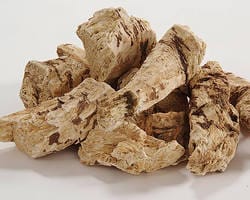
Beyond the medicinal aspect, vermouth was historically born of a clear practical and commercial need: vermouth was born to save the remaining wine at the bottom of the tanks. It was not invented as a glittering marketing idea, but as a creative way to prevent the less successful parts of the wine-production process from going to waste. In the past, the bottom of the fermentation tanks was saturated with grape skins. When these skins were pressed in a wine press, the resulting wine was too strong, heavy and concentrated for ordinary drinking. To soften it and turn it into a pleasant, smooth drink, the producers added sugar, herbs, flowers, fruit and spices. Vermouth was once an act of thrift.
The Vermouth Map: Turin, Chambéry and Spain
When discussing the world’s famous vermouth regions, the following historical and contemporary landmarks shape the industry:
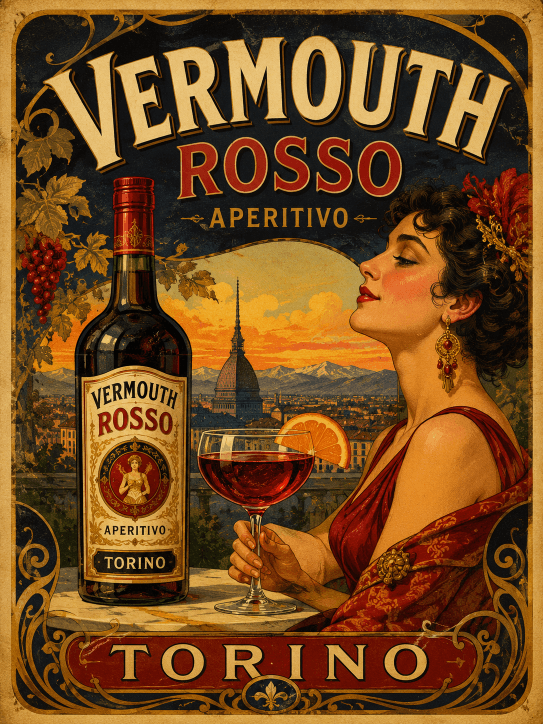
- Turin and Piedmont, Italy: the most important historical center of modern vermouth. Today, “Vermouth di Torino” is a category with a protected regional identity, although in modern Turin production is directed mainly toward export and the locals hardly drink it in their day-to-day lives.
- Chambéry, France: a region identified with paler and drier vermouths, led by the house of Dolin. This is a refined, less heavy style that holds a protected designation of origin (Appellation).
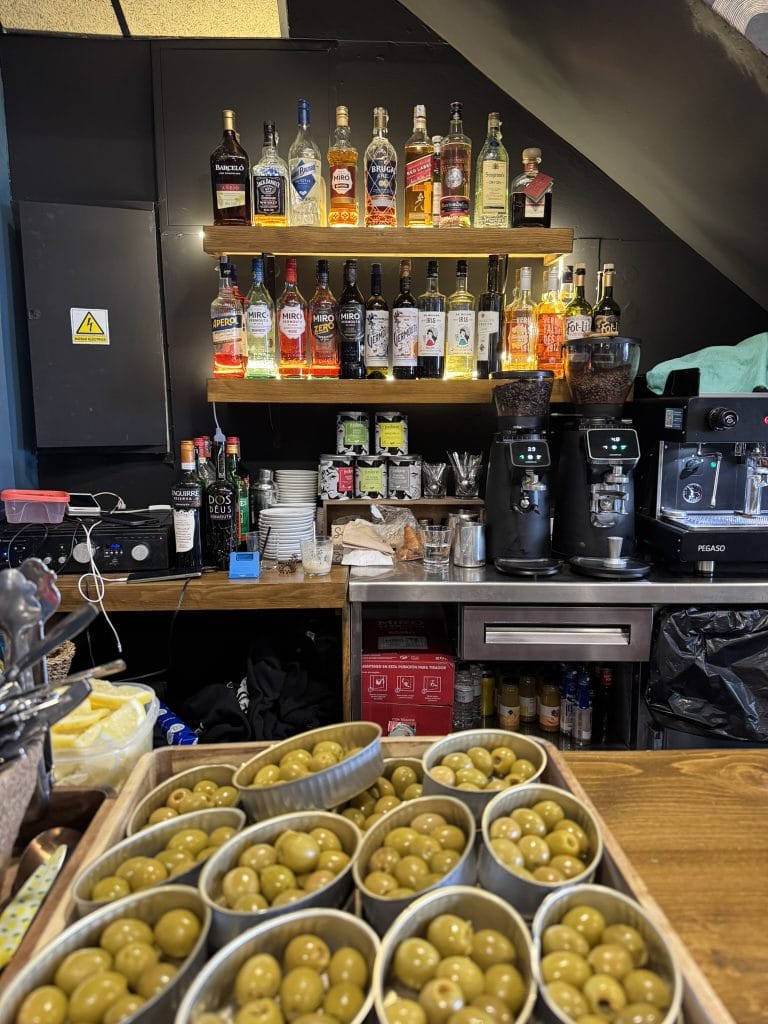
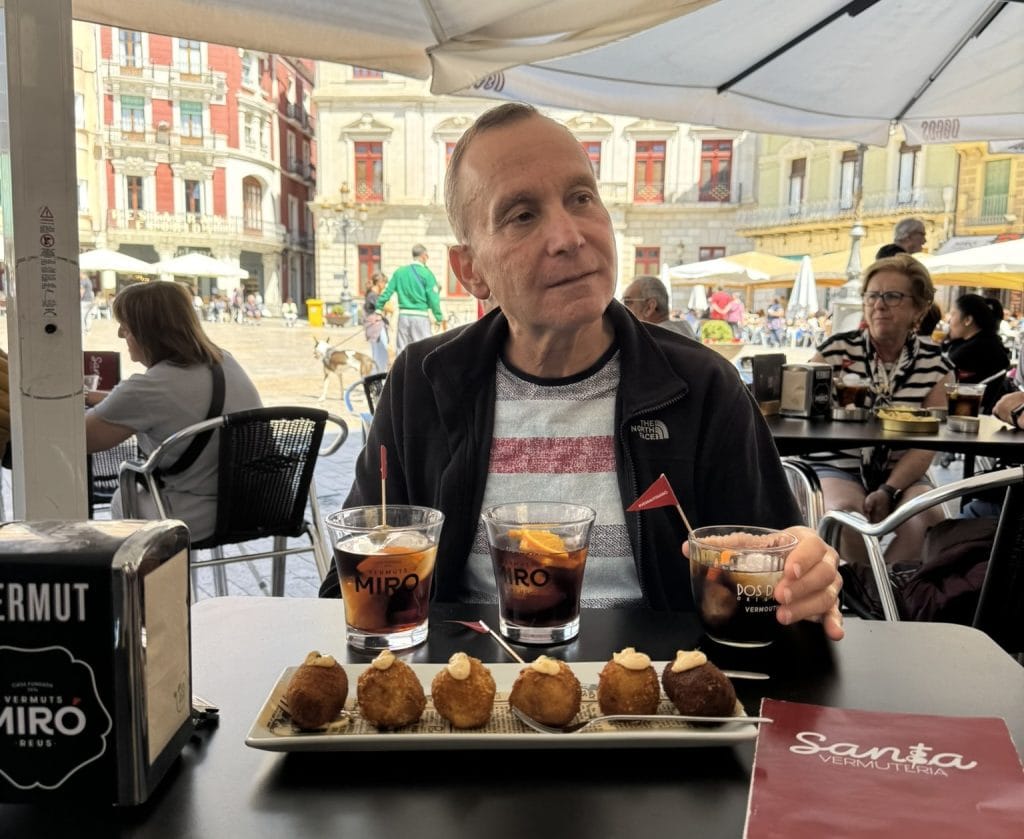
- Spain (Catalonia, Madrid, Rioja): the only place in the world where vermouth is almost a religion and a regular social ritual known as “la hora del vermut” (vermouth hour), around midday on weekends. As a fixed part of the routine of families and friends, immediately after leaving church and before lunch, the world stops for a moment for a light social break. In Spain, vermouth is drunk straight, over ice, with an orange slice or an olive, accompanied by salty tapas whose role is to “lift” and sharpen the drink’s herbal bitterness. For this reason, Spanish vermouth is produced at 15% alcohol, allowing the relaxed drinking of more than one glass, whereas international vermouths are stronger (16.5% to 17.5%) so that they can stand up to the gin in cocktails.
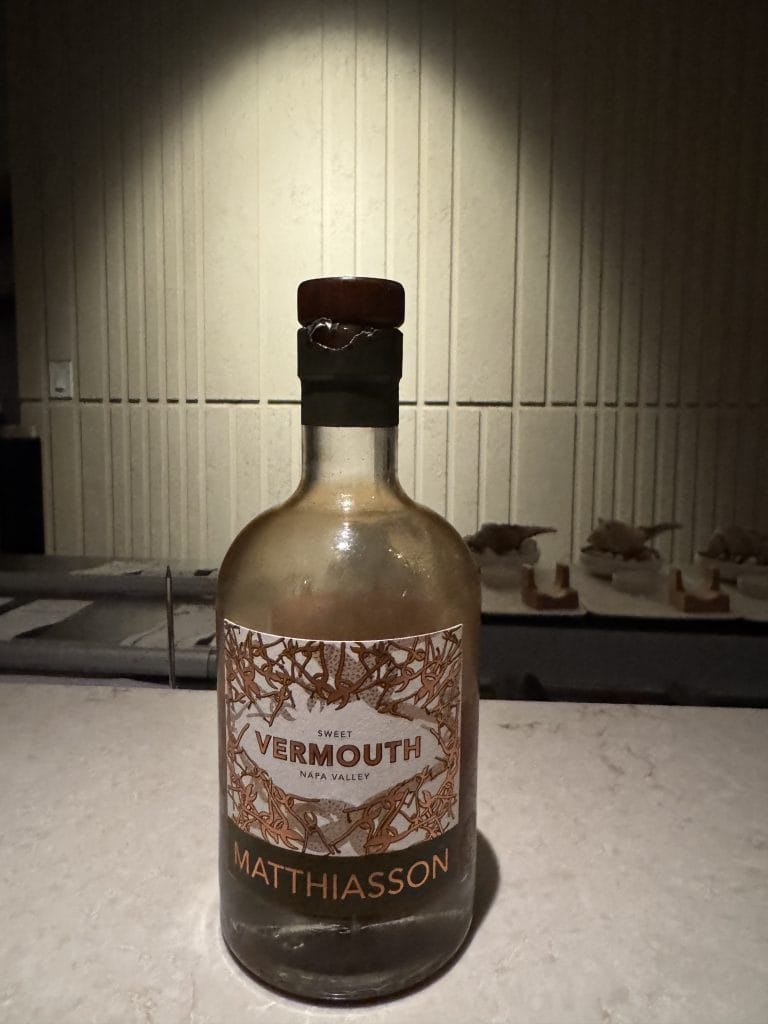
- The United States and Britain: over the past decade, a new wave of local vermouths has emerged, along with bartenders who have returned to treating it as a quality ingredient rather than as a dusty bottle, thanks to the revival of classic cocktails such as the Negroni and the Manhattan.
The Main Types of Vermouth
The classical and modern division of the vermouth world extends across several prominent styles:
- Red Vermouth / Rosso: the style most closely identified with Italy and Spain. It is generally sweeter, darker and more spiced, and is suitable for drinking straight or in cocktails such as the Negroni, Manhattan and Americano.
- Dry Vermouth / Dry: historically identified with France and the American Martini cocktail. It is pale, sharp, herbal and citrusy, and is suitable as a dry aperitif.
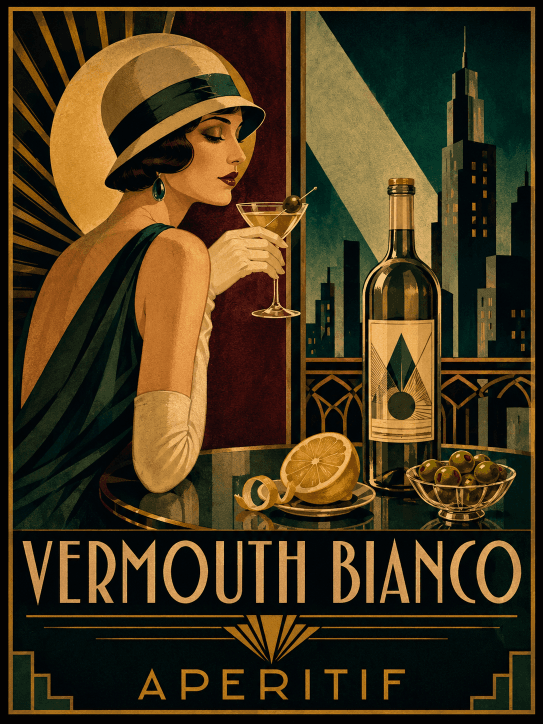
- White Vermouth / Bianco or Blanc: usually semi-sweet, soft and floral, sometimes seasoned with vanilla, chamomile or citrus peel, and works wonderfully with soda and ice.
- Spanish Vermouth for Drinking Straight: built around 15% alcohol to provide an everyday, moderate and relaxed sipping experience.
Priorat at the Forefront: Two Producers, Two Philosophies
Within the Priorat and Montsant region, identified with serious and powerful red wines, vermouth takes on a different depth. It is not a side product, but a way of reinterpreting local varieties and old traditions.
1. Dos Deus: Wine Is the Day, Vermouth Is the Night
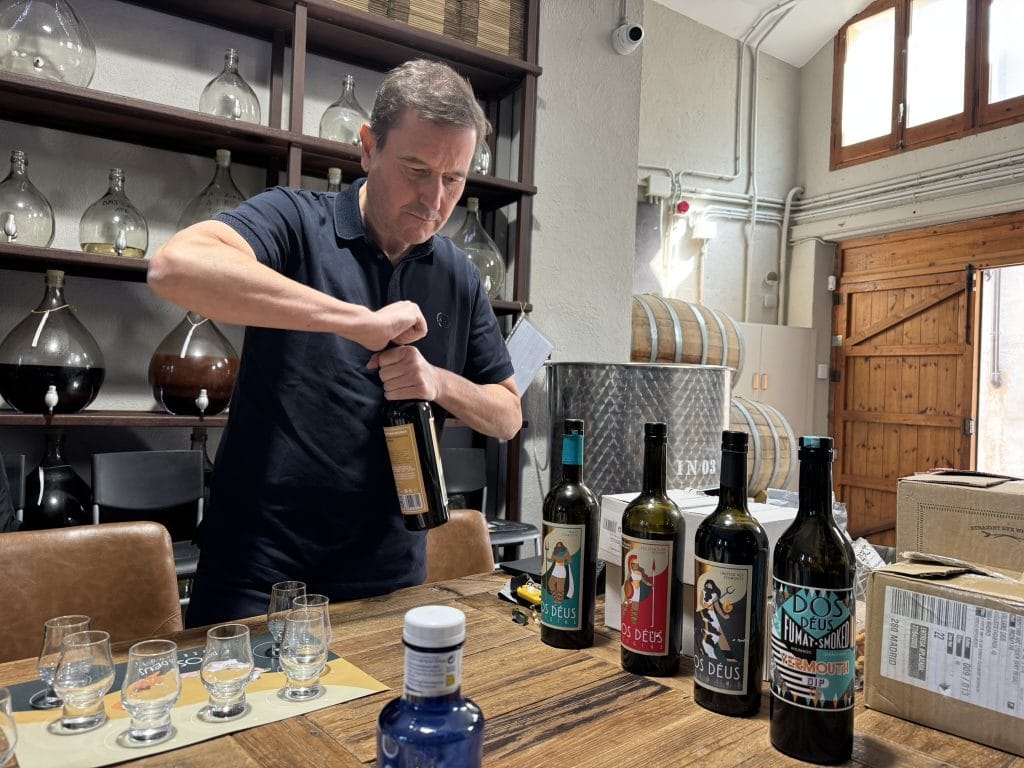
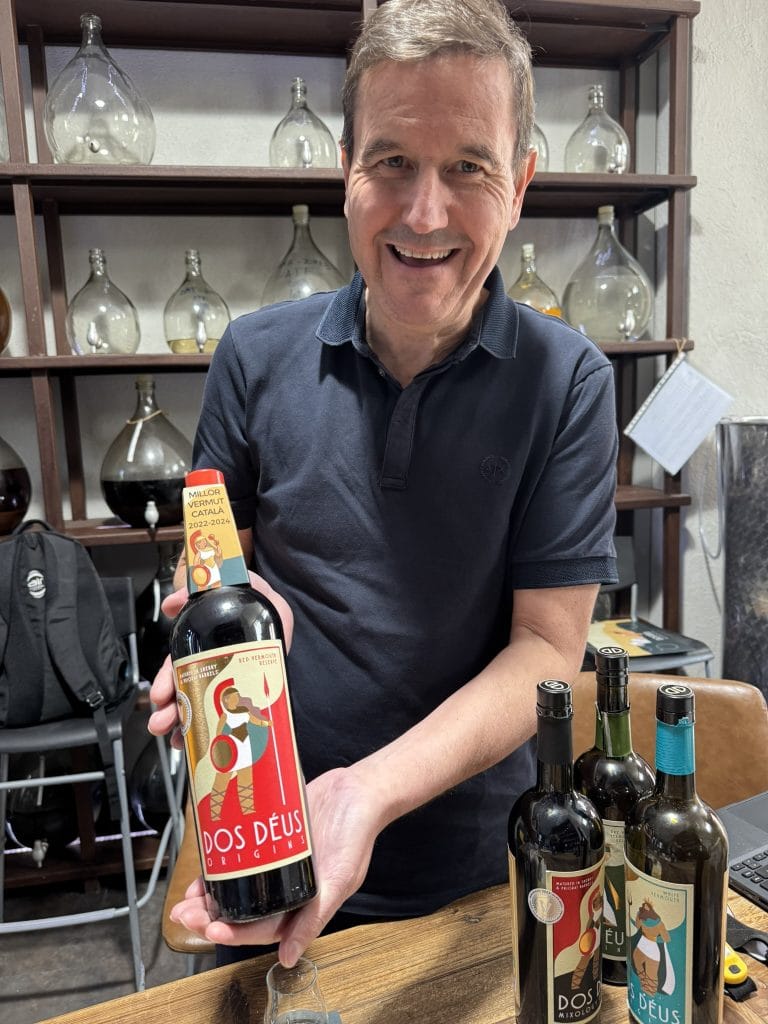
Behind the Dos Deus vermouth brand stands Alex, who came from the worlds of wine, importing and marketing. He tasted thousands of wines a year, knew the great wine names of the world, and imported sought-after brands — and then discovered that the market in which he excels is not necessarily wine. In his worldview, “wine is the day; vermouth is the night.” Wine represents the day, tradition and rigid rules; while the night and vermouth represent freedom, experience, the bar and a narrative that makes the customer feel good. The brand name “Dos Deus” means “Two Gods” in Catalan. The concept draws inspiration from Janus, the god with two faces: night and day, or beginning and end. Accordingly, the drink is defined as dual-purpose: an aperitif to open the meal and a rich digestif to end it.
Instead of using the simple Airen variety, as is customary in inexpensive vermouth, Alex uses Macabeo grapes harvested at extreme overripeness to achieve a high sugar concentration, and produces from them a quality wine that serves as the base for the vermouth.
Alex compares quality vermouth to perfume: when the bottle is closed, it keeps for 5 to 10 years, but from the moment it is opened the aromas dissipate, and it is therefore recommended to finish it within six months to a year.
2. Celler Masroig: “Vermouth Is a Deep World”
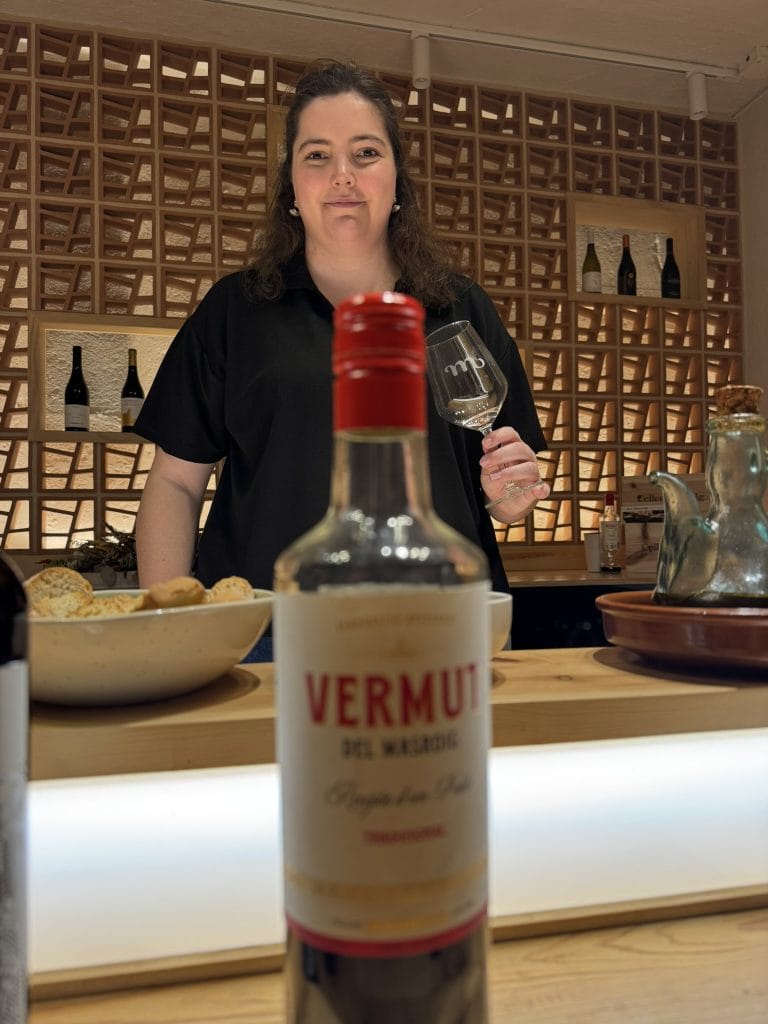
At the Masroig winery, the vermouth is made from red grapes — mainly Grenache (Garnacha) and Carignan (Cariñena). This raw material brings with it tannin, acidity, color and a distinct local character. In the past, the winery produced a “modern” version of the classic recipe. During a tasting at the winery, I liked this version less and found it more bitter and flatter. Over the years, the decision was made to return to the “classic” recipe. I found this version smooth and balanced; it is not too bitter and is characterized by a clear orange presence and wonderful sweetness. The tasting manager told us that when her father first tasted the classic version, it immediately reminded him of the vermouth his mother used to make at home.
Vermouth, Amaro, Aperitif and Digestif
The confusion between vermouth and amaro is understandable: both inhabit a world of herbs, roots, peels and bitterness. But technically they belong to different families. Vermouth is wine fortified with alcohol and flavored with plants and wormwood. Amaro is based on alcohol (but not wine), plants, roots, peels, sugar and bitterness. Amaro is more concentrated, liqueur-like and sometimes more “medicinal.”
Aperitif and digestif are not production categories but categories of use. An aperitif is drunk before food to whet the appetite: it is generally less heavy, less sweet, and has an awakening acidity or bitterness. Vermouth, Campari, Aperol, dry sherry and cocktails such as the Negroni or Americano can serve as aperitifs. A digestif is drunk after food to “close” the meal; it is generally stronger, more concentrated, bittersweet or more herbal. This is where many amaros come in. Dos Deus is interesting because it tries to place vermouth on both axes — both opening and closing.
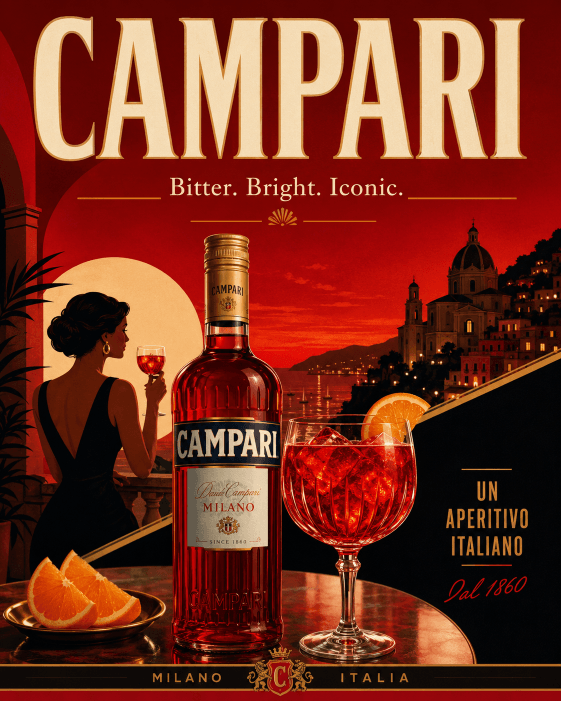
Campari is a bitter Italian liqueur (bitter liqueur / aperitivo bitter) made from alcohol, sugar and an infusion of herbs. Structurally, it belongs to the world of bitter liqueurs such as amaro, but unlike them, it is classified as an aperitif (Italian bitter aperitif) and is traditionally consumed at the beginning of the meal.
Why Is the Famous Cocktail Called Dry Martini and Not Dry Vermouth?
James Bond, 007: “Two vodka martinis, please. Shaken, not stirred.”
Madeleine: “Make one a dirty martini”.
From the James Bond movie Spectre (2015)

According to legend, during the “Gold Rush” period (around the 1860s), a gold miner who had become wealthy arrived in the town of Martinez, California, and asked to celebrate his good fortune. The bartender, who did not have champagne, concocted for him a drink of gin, sweet red vermouth, bitters and an olive. A second and popular explanation links the name to the Italian brand Martini & Rossi, one of the most common vermouth producers in the world; the cocktail was simply named after the vermouth placed in it.
And why does Madeleine, James Bond’s lover, say in the quote above, “Make one a dirty martini”? Because the olive brine in the martini clouds the clarity of the drink.
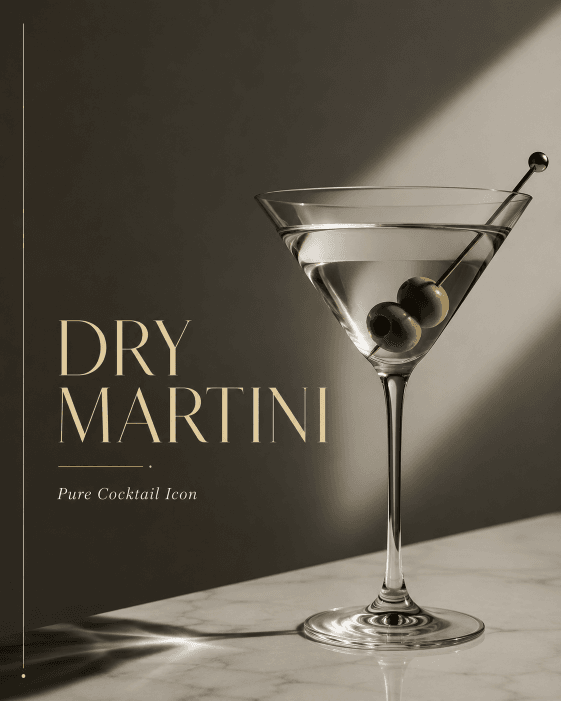
During Prohibition in the United States, gin was easy to produce illegally, which boosted the cocktail’s status. With the repeal of Prohibition and the return of quality gin, the Martini became a symbol of cosmopolitan elegance. In early recipes, the ratio between gin and vermouth was 1:1 or 2:1, but over time the “Dry Martini” became drier and drier (3:1, 5:1, 10:1, and even a light rinse of the glass with vermouth). Churchill is credited with saying that to make a perfect Martini, it is enough to pour cold gin and glance at the bottle of vermouth from the other side of the room, or to “look toward France across the Channel” — the homeland of dry vermouth. The Martini changed from a shared drink of gin and vermouth into a cult of extreme dryness, in which the vermouth almost disappeared.
The Martini was defined by H.L. Mencken as “the only American invention as perfect as a sonnet.” Indeed, the Martini is a distinctly American cocktail. Historians of the world of alcohol unanimously agree that the drink was born, developed and acquired its legendary identity in the United States during the second half of the 19th century, and it is often considered a unique American art form, just like jazz music.
Epilogue: Where Should One Taste Quality Vermouth?
- Barcelona, Spain: the most accessible city in which to experience the vermouth ritual. Iconic places such as Morro Fi, Quimet & Quimet, Bar Electricitat and La Confiteria offer a glass of bracing local red vermouth, straight over ice with an orange slice and an olive.
- Madrid, Spain: Spain’s capital excels at serving vermut de grifo — vermouth straight from the barrel — in an everyday, social atmosphere, alongside tapas.
- Turin, Italy: here vermouth is tasted as a historical heritage. Places such as Caffè Mulassano connect the rich, spiced sip to the Piedmontese aperitivo.
- New York and London: the best way is through serious cocktail bars. In New York, places such as Amor y Amargo are considered temples devoted entirely to the world of bitters, amaro and quality vermouth.
Vermouth is a drink of welcome uncertainty. It begins as wine, but refuses to remain only wine; it was born of medicinal plants, but it is not medicine. In Priorat, the region where wine tends to speak in a loud and powerful voice, vermouth offers a different, intimate conversation — less about scores and prestige, and more about memory, herbs, bitterness and a certain hour of the day when the world stops for a moment. At wineries such as Celler Masroig, this is a winemaking tradition that saves and refines the tough red wine, while at brands such as Dos Deus, it is a mythological alchemy of the night world that seeks to turn the drink from a Sunday sip into a drink of the gods. Good vermouth is not merely an aperitif — it is an entire story inside a bottle.
