
For hundreds of years, the name of Tokaji wine was associated with European aristocracy and splendor. Noble families throughout the Western world aspired to own a piece of land in this region, or at least to earn a sip of the golden liquid. The list of its admirers included the names of Russian tsars, Queen Victoria, and even the American Founding Fathers Thomas Jefferson and George Washington. However, this golden age was abruptly cut short by the rise of the communist regime in Hungary.
The Wilderness Years: Between Ideology and “Brake Fluid”
Zoltan Kovacs, Director, Royal Tokaji: During the period of communist rule (1945–1989), Tokaji production underwent a process of nationalization and industrialization. The goal changed: instead of wine for the nobility, the aim was to produce enormous quantities in order to supply the “proletariat.” For mass production, the vineyards were moved from the steep, high-quality hills to the valleys, where the layer of soil was thick and suited for working with huge Soviet tractors. Not only were the hill vineyards abandoned; the soil was destroyed when the tractors carved roads through them.
The damage was not only to the soil but also to the production methods. In order to save costs and ensure that the wine would withstand transport, deliberate oxidation was introduced in wooden barrels that were not filled to the top. The result was a brown wine with the flavor of burnt caramel and nuts, in which the original fruit was completely “killed.” Hugh Johnson, the famous wine historian, cynically described the result as a liquid whose taste and appearance resembled “brown brake fluid.”
The Royal Tokaji Revolution: The Battle for Freshness
With the fall of the Iron Curtain, international wineries began purchasing local wineries with the aim of restoring the former glory. The Royal Tokaji winery was among the pioneers of the revolution. The winemaking unique to Tokaji had been lost during the communist period, and it was necessary to reclaim the unique technique for vinifying the Aszú grapes from winegrowing families who had left for the West during the communist period.
After the working methods were corrected, the most significant obstacle was the Hungarian National Wine Rating Committee (OBB). When the winery presented the 1990 vintage — a golden, fragrant, and refreshing wine — the committee was stunned and rejected it eight times. The government tasters had grown accustomed to the oxidized, dark wine and claimed that the new wine was “too clean” and therefore lacked character. Hugh Johnson, one of the winery’s owners, had to use his international stature to make it clear that the committee was not protecting tradition, but rather the quality failures of the communist period. The struggle succeeded and led to a radical change in Hungary’s wine laws.
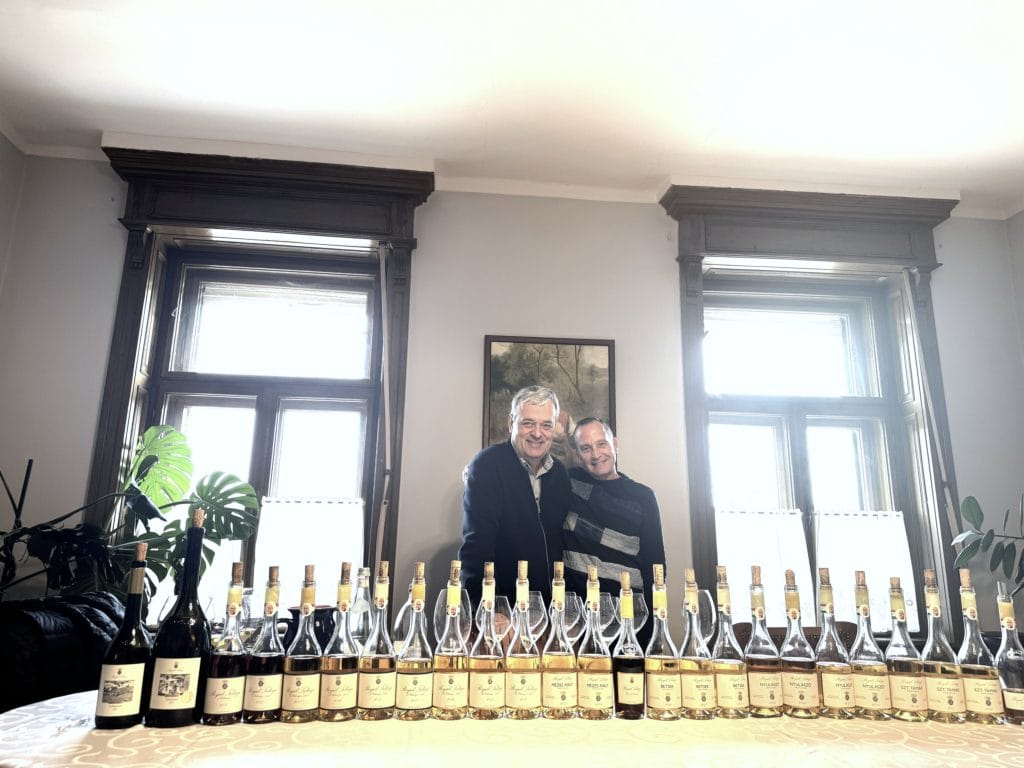
Tasting of Royal Tokaji Wines
Wine | My score | My tasting impressions | Critics’ scores |
Szt. Tamás 6P Aszú 2018 | 94 | A very complex nose of tropical fruits and dried flowers. Very mineral. Medium to full-bodied, well structured, with a long finish. The sensation on the palate is almost velvety. | JS: 95 |
Szt. Tamás 6P Aszú 2017 | 96 | Wow. Complex. Very rich. Intense. 100% Furmint. Regal. | WS: 91, JS: 98, WE: 99 |
Nyulászó 6P Aszú 2018 | 94-95 | Fresher than the same vineyard in the 2017 vintage. Full-bodied. Fills the mouth. An amazing wine. Not yet released to the market. | WS: 95, JS: 96, WE: 96 |
Nyulászó 6P Aszú 2017 | 96 | Probably the winery’s best wine for 2017. Complex. Rich. Full-bodied. Wow. | WS: 94, JS: 98, WE: 97 |
Nyulászó 6P Aszú 2016 | 95 | Flavors of dates and figs. Wonderfully focused. | JS: 94, WE: 97, Decanter: 94 |
Nyulászó 6P Aszú 2013 | 94 | Some complexity. Date flavors. Rich. Medium-bodied. |
|
Betsek 6P Aszú 2018 | 94-95 | Wonderfully balanced and intense. Fills the palate. Long finish. | WS: 93, JS: 96, WE: 96, Decanter: 94 |
Betsek 6P Aszú 2017 | 94 | Rich and regal. Full-bodied. Chewy. Fills the palate. | WS: 96, JS: 98, WE: 97 |
Betsek 6P Aszú 2016 | 96 | Complex. An amazing wine. So focused. Concentrated. Amazing acidity. | JS: 95, WE: 97 |
Mezes Maly Aszú 6 Puttonyos 2018 | 94 | A dense nose, very delicate and elegant. | WE: 98, WS: 96 |
Mezes Maly Aszú 6 Puttonyos 2017 | 93-94 | Floral. Medium-bodied. Rich and with a long finish. Very elegant. | WE: 98, WS: 95 |
Aszú 6 Puttonyos 2018 | 94-95 | Wonderful richness. Balanced, harmonious, rich. | WE: 95 |
Aszú 6 Puttonyos 2016 | 95 | A wonderful wine. Very focused. Searing acidity that creates a balanced and harmonious wine. Long finish. | Decanter: 94 |
Aszú 6 Puttonyos 2017 | 93-94 | Aromas of flowers and peach. Rich and regal. Fills the palate. Long finish. | WE: 96 |
Aszú 5 Puttonyos 2003 | 92-93 | A 23-year-old wine that shows no signs of fading. Dried figs and dried dates. Elegant and harmonious. |
|
Dry Harslevelu 2019 | 93 | Some complexity. Grapefruit flavors. |
|
Furmint 2019 | 93 | A dry wine characterized by light complexity, aromas of grapefruit, flint, and salt. |
|
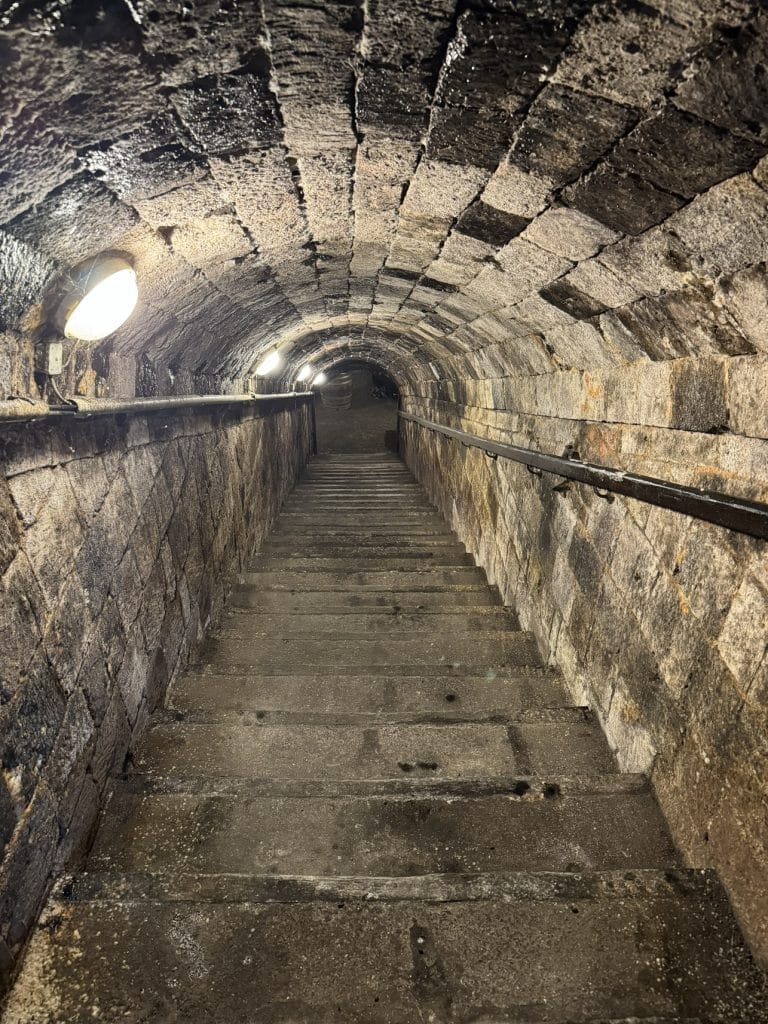
Vision and Privatization: The Case of Oremus Winery
Alongside Royal Tokaji, a revolution also took place at Oremus Winery. András Bacsó led a vision to rebuild Tokaji as a modern wine region similar to Bordeaux and Burgundy. To that end, Bacsó joined forces with the Spanish Álvarez family (owners of the celebrated Vega Sicilia winery). In 1993, a huge investment project began, including research into the purity of the soils and the construction of a modern winery.
At the same time, the post-communist Hungarian government faced a deep economic crisis and did not have the financial resources required to rehabilitate the national wine industry. At first, the government hoped to maintain active involvement through a “50-50” investment model, under which the state and the foreign investors would share ownership and expenses. However, the empty state treasury did not allow it to meet its financial obligations under this model. Economic reality forced the government to give up joint ownership and allow full privatization, paving the way for the entry of substantial international capital that was essential for purchasing modern technology and rehabilitating the historic vineyards.
Today, the fruity and clean style — the same style once deemed “disqualified” by the government committee — has become the gold standard of the entire region and has restored Tokaji’s status as one of the world’s most important and prestigious wines.
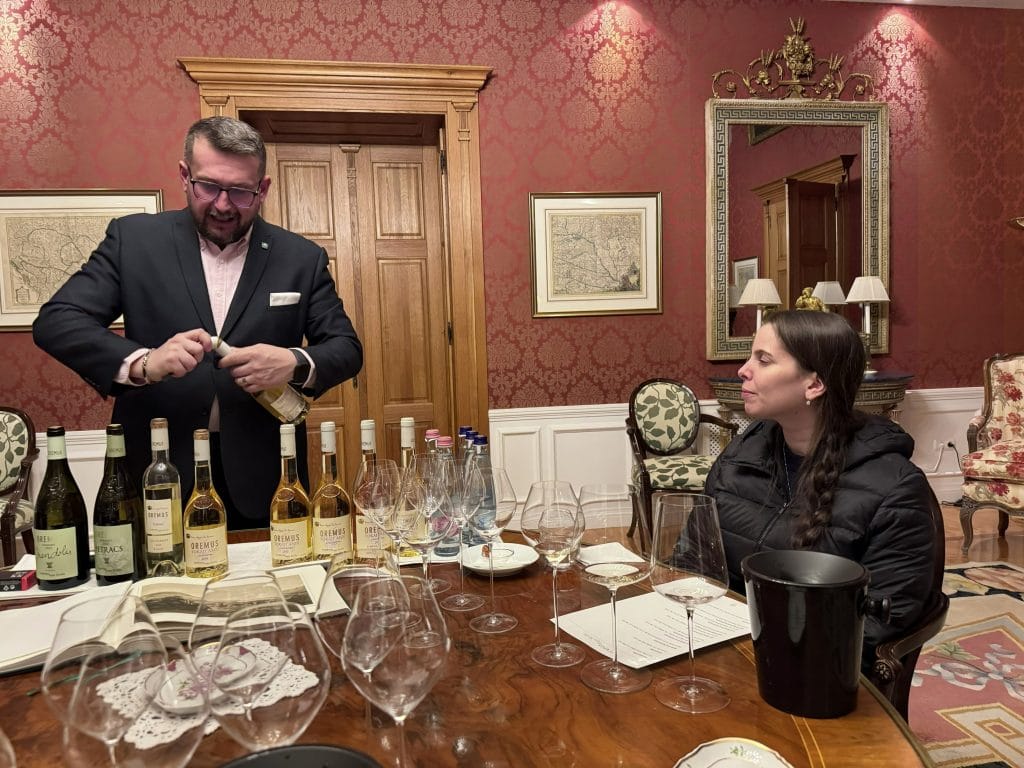
Tasting of Oremus Wines
Wine | My score | My tasting impressions | Critics’ scores |
Aszú 6 Puttonyos 2021 | 94 | Some complexity, tree resin, perfect ripeness, elegant. | |
Aszú 6 Puttonyos 2016 | 94 | Deep raisin aromas, high sweetness, full body, balancing acidity, long finish. | WS: 97, Decanter: 95 |
Aszú 5 Puttonyos 2021 | 94-95 | Some complexity; the acidity provides balance and makes the wine wonderfully fresh; fills the palate. | |
Aszú 5 Puttonyos 2017 | 95 | Resonant complexity, ripe peach, elegant, with slight bitterness, full-bodied, almost oily. Endless finish. | WS: 96 |
Aszú 3 Puttonyos 2022 | 94 | Some complexity, a floral nose, wonderfully harmonious and elegant. | |
Petracs Furmint 2022 | 94 | Complex on the nose, fresh, fills the palate. Citrus fruit, pleasant minerality, saline finish. | JS: 92 |
Tokaji versus Sauternes: The Battle for the Crown of the World’s Best Sweet Wine
In the world of white sweet wines, two names stand above all others: Tokaji from Hungary and Sauternes from Bordeaux in France. While both rely on the Botrytis fungus (“noble rot”) to create concentrated flavors, the differences between them are profound — from climate and geography to production philosophy.
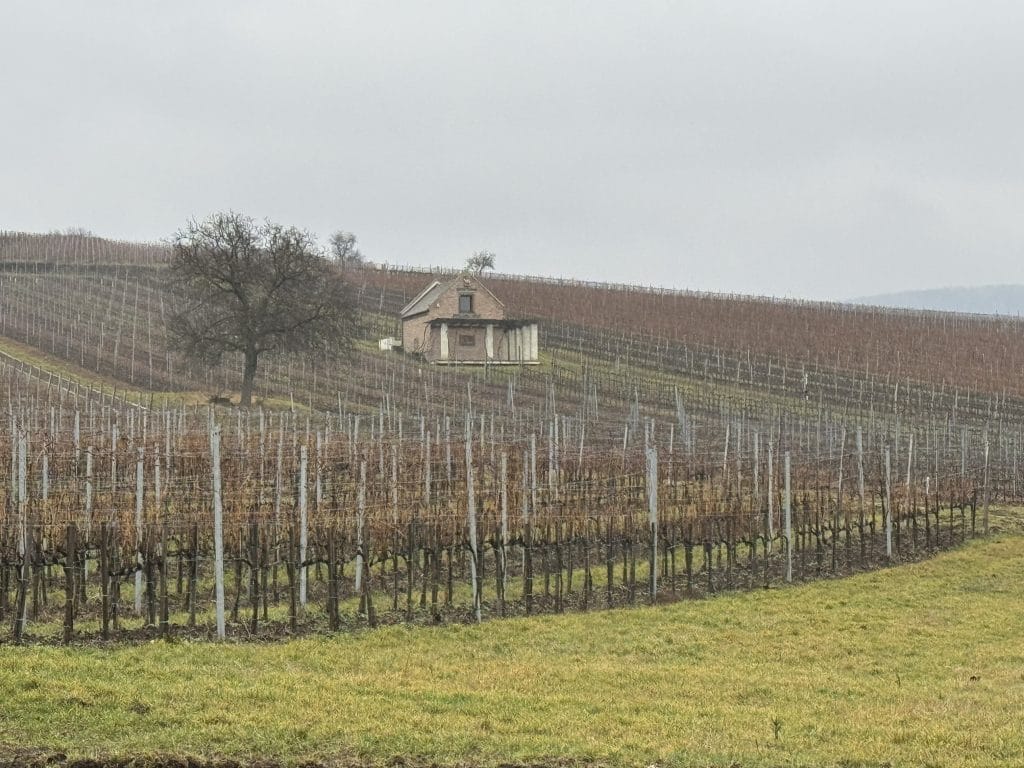
Acidity versus Alcohol: Games of Balance
Zoltan Kovacs, Director of Royal Tokaji Winery, explains that the most essential difference lies in the structure of the wine. Tokaji wines are characterized by a significantly higher level of acidity than Sauternes. This acidity stems from two central reasons: Tokaji’s more northerly latitude, and the local Furmint variety, known for its high natural acidity.
In Sauternes, by contrast, balance is achieved in another way. To balance the sweetness, winemakers rely on higher alcohol levels and extensive use of new oak — elements that are not necessary in Tokaji thanks to that refreshing acidity.
The Climate and the Raisin: Dry versus Humid
Another difference lies in the climate. Gergely Somogyi of Barta Winery notes that the Sauternes region is characterized by a more humid climate, which requires harvesting whole clusters of grapes (similar to the “Szamorodni” harvest in Tokaji). In Tokaji, by contrast, the climate is more continental and dry, causing the grapes to shrivel extremely quickly — sometimes within only two weeks the grapes lose about 80% of its moisture and becomes an “Aszú” raisin.
Because it is not possible to press must from such dry raisins, Tokaji adopted a unique production method: maceration. The Aszú raisins are harvested one by one in several rounds and are soaked in base wine or in fermenting must in order to extract their sugars and flavors.
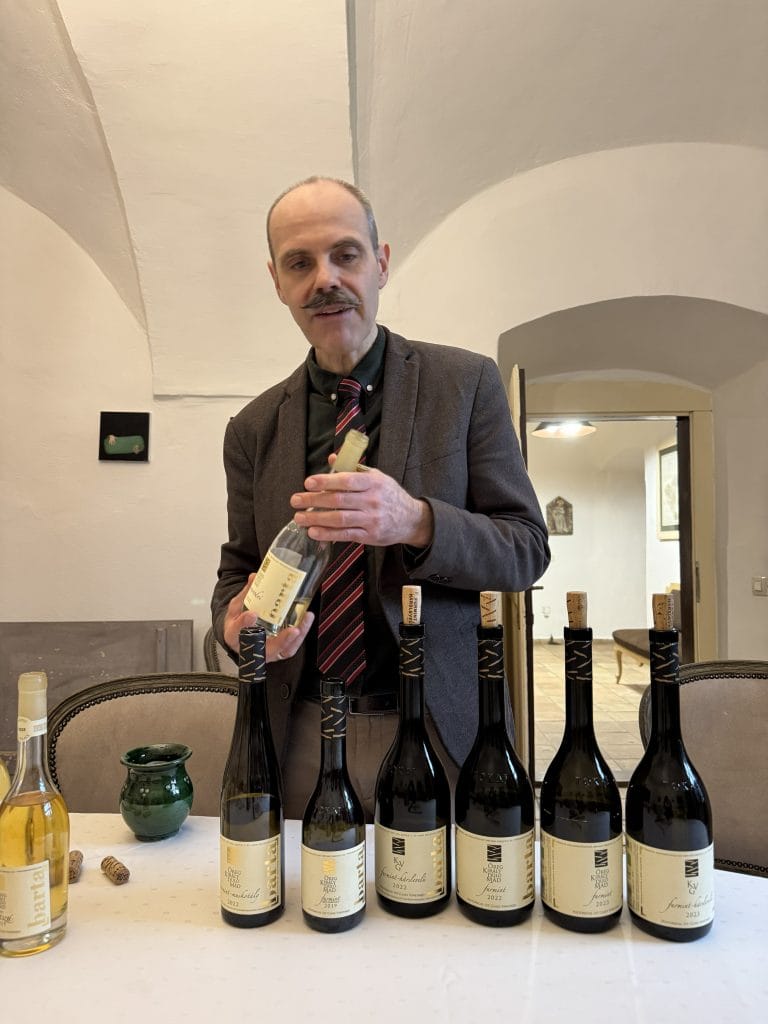
Tasting of Barta Pince Wines
Wine | My score | My tasting impressions | Critics’ scores |
Öreg Király Aszú 6 Puttonyos 2019 | 95 | An amazing wine. Complex. Full-bodied. Fills the palate with its flavors. Long finish. | JS: 95 |
Öreg Király Duo Mad Harslevelu Aszú 6 Puttonyos 2019 | 93 | Complex. A feminine wine in its roundness and elegance. Medium body and a long finish. | |
Öreg Király Aszú 6 Puttonyos 2016 | 95 | An amazing wine. Complex. Full-bodied. Rich, almost oily. Very long finish. | JS: 95, Decanter: 97 |
Öreg Király Aszú 6 Puttonyos 2017 | 93 | The nose is still closed. Rich and concentrated on the palate. Fine balance with a long finish. |
The Intellectual Wine of the World
According to Gergely Somogyi, Tokaji is the “most intellectual wine in the world.” This definition arises from the enormous number of decision points facing the winemaker: he must decide the degree of dryness of the harvested grapes, the type of wine in which the fruit will be macerated (dry or fermenting), and even the pressing method. This is in contrast to Sauternes wines, where harvesting the whole cluster leaves less room for complex winemaking manipulations.
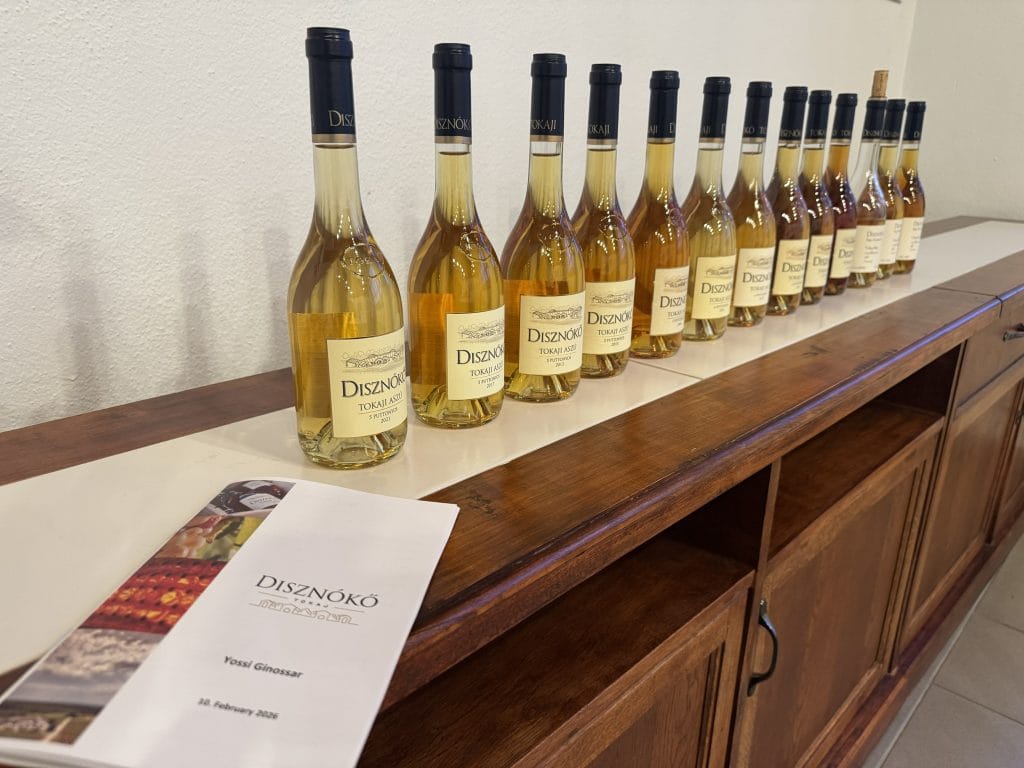
Tasting of Disznókő Wines
Wine | My score | My tasting impressions | Critics’ scores |
Kapi Vineyard 6P Aszú 2017 | 97 | Wow. Extremely complex. Minerality. Focused. Long finish. | JS: 96 |
Kapi Vineyard 6P Aszú 2015 | 96 | Citrus and dates. Very long. | JS: 95 |
Kapi Vineyard 6P Aszú 2011 | 95 | Wow. Complexity. Date flavors. Full-bodied. Searing acidity. Long finish. | JS: 95 |
Kapi Vineyard 6P Aszú 2005 | 96 | Complex. Tobacco. Dates. Raisins. Full-bodied. Fills the palate. Long finish. | WS: 95 |
Aszú 5 Puttonyos 2018 | 93 | Wow. Excellent value for money. Fresh and intense. | Dec: 94 |
Aszú 5 Puttonyos | 94 | Rich and regal. Full-bodied. Chewy. Fills the mouth. | – |
1413 Szamorodni 2019 | 92 | Traditional, complex, dry finish. | RP: 92 |
The Lost Years and the Comeback
History was not always kind to Tokaji. At the beginning of the 20th century, Tokaji wines were considered more prestigious and of higher quality than those of Sauternes. However, 50 years of communist rule under the Iron Curtain caused the international market simply to forget them. While Sauternes continued to build its name in the West, Tokaji remained isolated beyond the Iron Curtain. Today, the region is in the midst of a journey to regain international recognition — a mission that appears more possible than ever thanks to the uniqueness and complexity of this wine.
“The Romeo and Juliet of Tokaji”
The story of Lajos and Irén, known as “the Romeo and Juliet of Tokaji,” is a heartbreaking human drama woven into the turbulent history of Hungary in the 20th century. It was told to us by Zelenák Ferenc, Brand Ambassador, Oremus, whose uncle was “Romeo”.
The Beginning of Love in the Shadow of War
Lajos Zelenák, a Calvinist Christian from Tokaj, met Irén, a beautiful Jewish teacher, and the two fell deeply in love. For them, religious differences were only insignificant details in the face of their love. In the 1940s, with the implementation of the race laws and the establishment of the ghettos, reality struck them. Irén and her family were transferred to the ghetto, and in order to meet her and smuggle her out of the ghetto, he devised a daring plan: he enlisted in the ranks of the “Nyilash” (the Hungarian Nazis) and paid a large bribe so that he would be stationed as a guard in the ghetto. The plan failed tragically: by the time Lajos was stationed as a guard, the ghetto had already been liquidated and Irén had been sent to Auschwitz-Birkenau. Heartbroken, he burned his uniform and tried to hide in Tokaj, from the “Nyilash,” who regarded him as a traitor and searched for him in order to eliminate him.
The Double Tragedy
In January 1945, with the entry of the Soviet army into Tokaj, Lajos was captured by it and taken to labor camps in Siberia as part of a Russian effort to make up for losses in manpower. Four months later, in April 1945, Irén returned from Auschwitz wearing potato sacks sewn into a dress. She came to Tokaj to search for Lajos, her beloved, but discovered that the Soviets had taken him. She searched for him for a long time, but all she managed to obtain was his prisoner number in the camp.
The Bittersweet End
After months of searching, Irén left Hungary feeling that the mentality in the country had not changed — only the color of the shirts had changed from brown (Nazism) to red (communism). She immigrated to Israel and settled in Haifa. Although she built a new family in Israel, Irén did not forget Lajos. Until the 1980s, she continued to send a letter to Tokaj every year, waiting for him and announcing that she was still here, but she never saw him again. Their story remained as testimony to a great love defeated by the horrors of the 20th century.
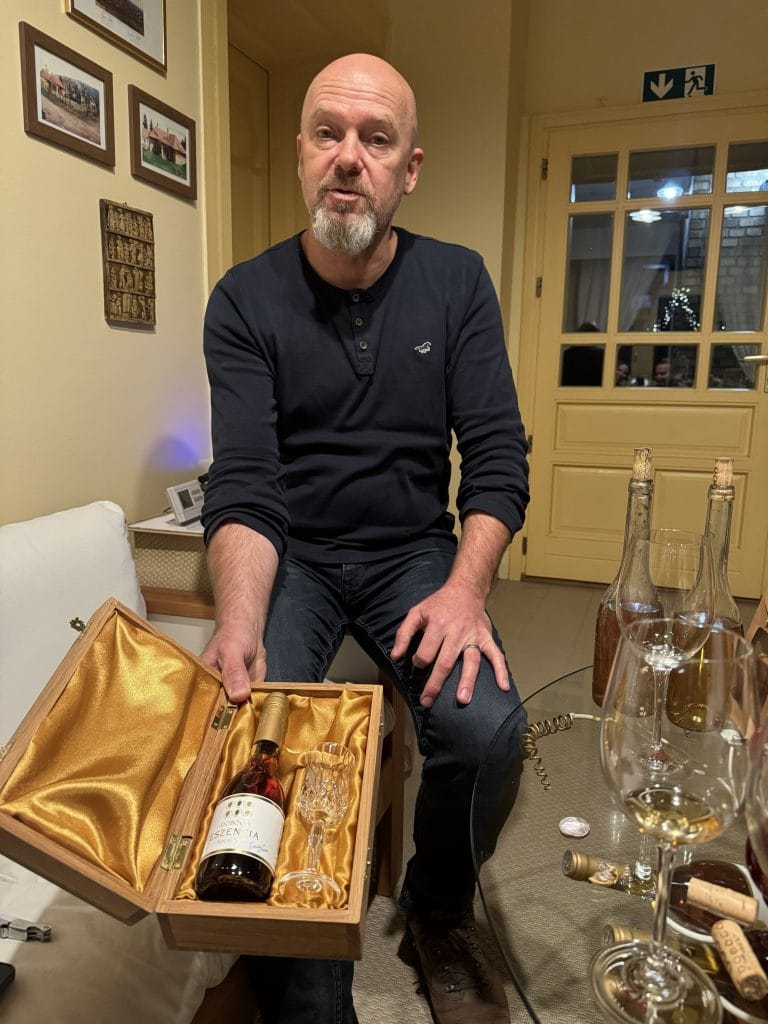
Tasting of Dobogó Wines
Wine | My score | My tasting impressions | Critics’ scores |
Öreg Király Aszú 6 Puttonyos 2019 | 95 | An amazing wine. Complex. Full-bodied. Fills the palate with its flavors. Long finish. | JS: 95 |
Tokaji Aszú 6 Puttonyos 2021 | 95 | Some complexity. Citrus blossom. So rich on the palate! Fills the palate. Long finish. The best in the tasting. | |
Tokaji Aszú 6 Puttonyos 2011 | 94 | Some complexity. Dates. Full-bodied. Searing (powerful) acidity. Long finish. | |
Tokaji Aszú 6 Puttonyos 2018 | 94 | A dominant and assertive nose of peach. 70% Furmint. Intense flavor. Sweet. Lacks a little balancing acidity. Long finish. |
Essencia as an Antibiotic
Attila Domokos, Owner and winemaker, Dobogó, says that Tokaji Essencia wines are produced almost only from the natural and concentrated free-run juice that drains naturally from raisined grapes affected by “noble rot”, after selective harvesting of the shriveled berries (called Aszú berries). There is no ordinary pressing here in the accepted sense: the weight of the berries in the pile creates a slow dripping of especially thick must, very rich in sugar, acid, and aromatic compounds. Because of the extreme sugar concentration, fermentation is very slow and sometimes continues for years, and sometimes the final alcohol remains relatively low, around only a few percent. The result is a very rare, viscous wine, extremely sweet but balanced by high acidity, with an exceptional aging ability of dozens and even hundreds of years. Essencia is considered the most concentrated and prestigious expression of Tokaji. To produce “Essencia,” one ton of grapes is used to produce only 5 liters of Essencia wine (to produce one teaspoon of it requires one kilogram of grapes). The 2018 vintage at Dobogó Winery produced an Essencia so thick that it feels in the mouth like royal honey. Essencia is considered a kind of antibiotic because of the Botrytis fungus. Attila Domokos, the owner and winemaker of Dobogó Winery, claims that no one in his family became ill with COVID. Everyone took one teaspoon before sleep, and that was enough to keep them healthy.
A 250 ml bottle costs 350 euros at Dobogo Winery, but abroad it is sold by the spoon — the price of one spoonful in a restaurant can range from 150 to 300 euros.
The Legend of the Jew from Mád
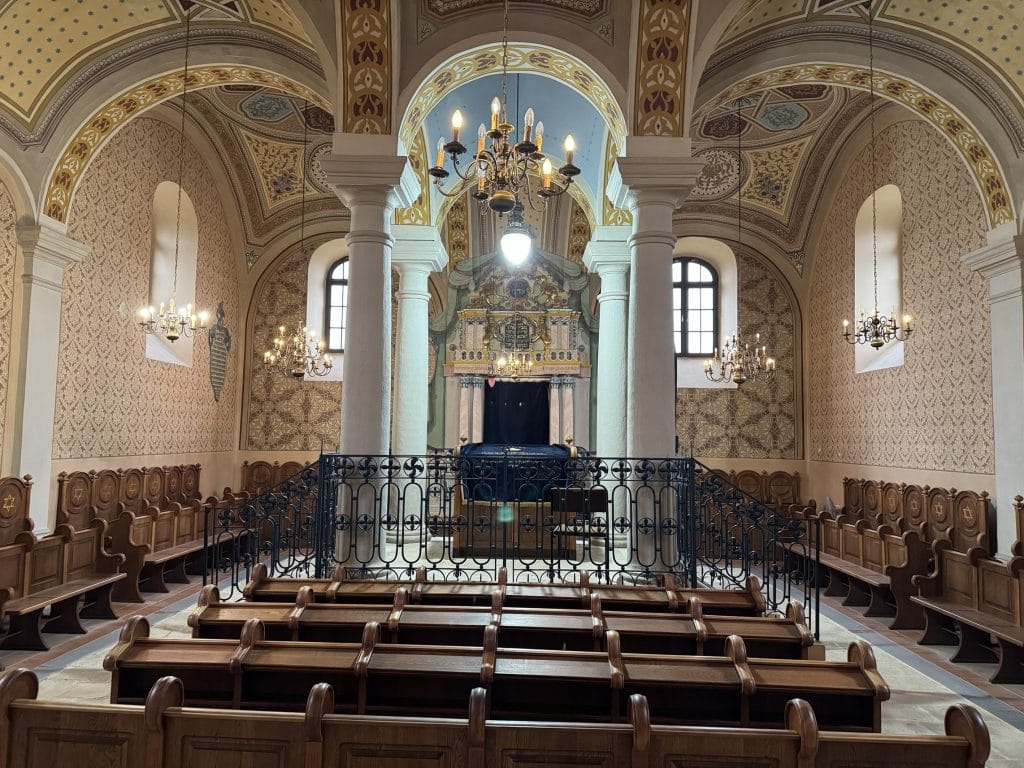
The local legend tells of a Jewish wagon driver who set out early in the morning from the town of Mád on his journey to the nearby town to perform an important task assigned to him by a client. He filled his beloved pipe, put on his hat, and set off. He relied on his horse, since this companion of his always knew where to go. After some time, as often happens on long journeys, the wagon driver fell asleep. The rough road did not disturb his sleep. On the way, a group of young men decided to play a prank on the wagon driver. They turned the wagon around in the opposite direction and urged the horse forward, back to the place where they had started. Naturally, the horse knew the way to Mád well, and returned home by itself. When they reached the town, the wagon driver woke from his sleep, rubbed his eyes in astonishment, and said: “Master of the Universe, what a tremendous wonder! This town looks exactly, but exactly, like my Mád! They have the same synagogue, the same streets, and even a woman standing here in the market who is yelling at me and looks and talks exactly like my wife!”
The legend of the Jew from Mád is known throughout Hungary. If someone works by mistake, people say about him: “You are where the Jew from Mád was,” or in other words: “You returned to the first square” (Back to square one) or “full gas in neutral.”
