
Tuscany
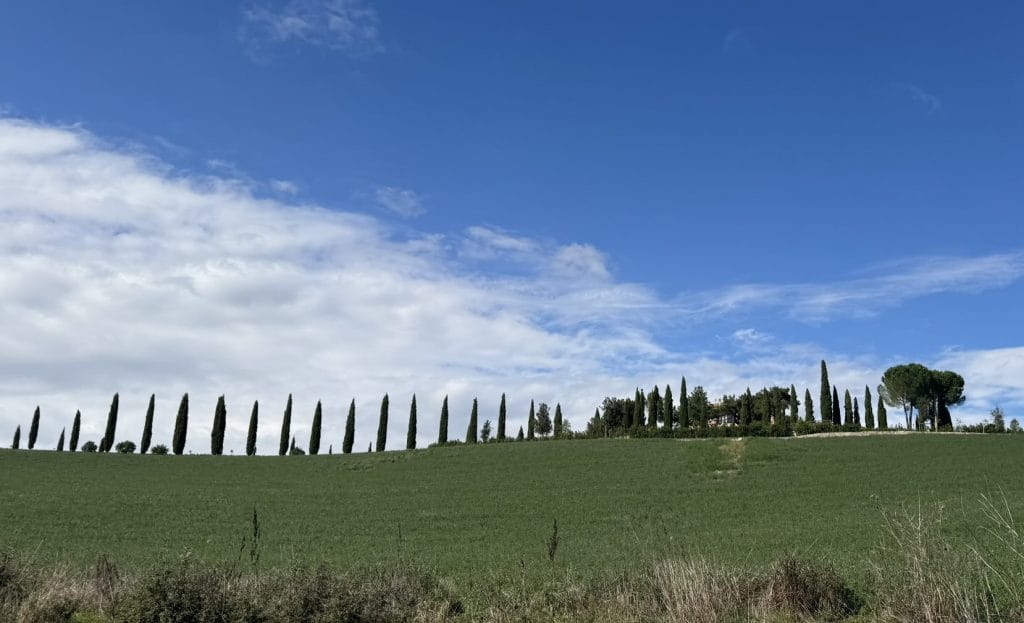
“Tuscany is the reason I believe in love at first sight.” Frances Mayes – author of Under the Tuscan Sun
Who among us does not dream wistfully of a journey to Tuscany? This region, nestled between Rome and Florence, has it all: cultural wealth, architecture, beauty, and a paradise for lovers of wine and food.
It is a land of dramatic, ever-changing landscapes in every shade of green—rounded hills crowned with ancient walled cities, small and picturesque villages set among vineyards and olive groves, all presided over by a celebrated culture of winemaking and cuisine that enchants every pleasure‑seeker who encounters it.
Chianti
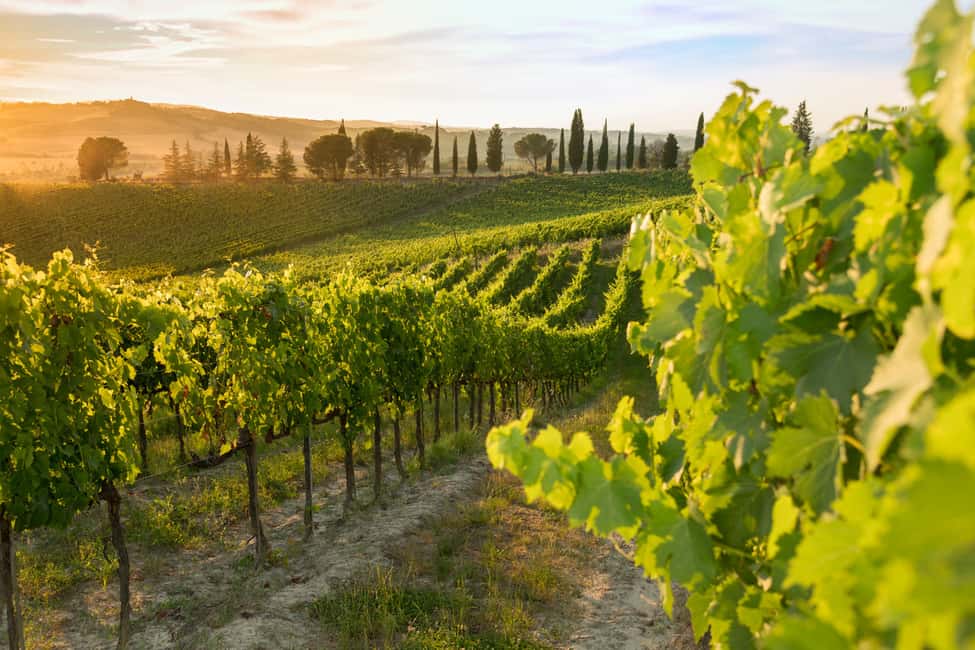
“A day will come, and you will sit in the corner of an inn, Gray-haired, over a bottle of Chianti. You will smile and spit a slice of tobacco, And say—yes, my friends, I have grown old.”Nathan Alterman, from his poem “A Reply Speech to an Italian Sea Captain”
Chianti is the name of an area in Tuscany that gave its name to one of the most famous wines in the world. The region is divided into seven sub-zones of Chianti production, the most prestigious of which is Chianti Classico, distinguished by the emblem of the black rooster.
Like many agricultural products in Europe, Chianti wine is governed by an appellation that defines strict rules for its production in order to ensure quality. In 1967, Chianti was granted DOC status. The problem with this standard was that it facilitated the production of simple wines: inexpensive, mass-produced, and of low quality. We all recognize the famous round Chianti bottle wrapped in straw that once starred in countless modest Italian restaurants around the world. Over time, the brand’s reputation faded and sales declined. Producers realized that if they wished to reclaim shelf space, they would have to pursue quality.
The revolution began in 1984, when the Chianti Classico formula was upgraded to DOCG status (a higher classification of official wine region). Stricter rules were enacted regarding vineyard cultivation, ensuring higher grape quality. The winning formula of densely planted vineyards with low yields was enthusiastically adopted, resulting in higher-quality wines.
Chianti wine and villains
In the film The Silence of the Lambs, the connoisseur cannibal Hannibal Lecter boasted that he once ate a human liver cooked with fava beans and accompanied by Chianti. Another villain, Tony Soprano, is frequently seen sipping Chianti. In the film From Russia with Love, James Bond begins to suspect the villain Grant when the latter orders red Chianti with fish — a mistake that a true connoisseur would never make…
Saul Bellow: “One never loses the passion for Brunello—it returns with every glass.”
In the area around the town of Montalcino, also in Tuscany and located about 100 kilometers southwest of Florence, another Tuscan wine of worldwide renown is produced: Brunello di Montalcino. The literal meaning of Brunello is “small and dark.” It is a dry red wine, darker than Chianti Classico, deeper in its fruity flavors, and intended for long-term aging.
Brunello’s roots go back only about 150 years, to the mid-19th century, when a local winemaker selected a Sangiovese vine and developed a legendary new wine—Sangiovese Grosso. After World War II, Brunello di Montalcino gained recognition as one of Italy’s rarest wines. At the time, it was produced by only one winery, Biondi-Santi. The high prices and prestige of these wines encouraged other producers to imitate Biondi-Santi’s success. By the 1960s, 11 producers were already making Brunello, and in 1968 the region was awarded DOC status. In 1980, Montalcino became the first wine region in Italy to receive the prestigious DOCG designation. By the early 21st century, nearly 200 producers were making Brunello di Montalcino.
Regulations stipulate that Brunello wines must be aged in oak barrels for two years, followed by at least four months in bottle before release. In practice, most producers distinguish between standard Brunello and Riserva. Regular Brunello reaches the market 50 months after harvest, while Riserva bottles are released a year later.
In 2008, it was reported that Italian authorities were investigating claims that major Brunello producers had mixed their wines with foreign grape varieties, thereby violating DOCG regulations requiring the exclusive use of Sangiovese grapes to produce Brunello. The suspected producers were believed to have added wine made from unauthorized grapes (heaven forbid—varieties such as Cabernet Sauvignon and Merlot) in order to make their wines more appealing to the international market.
In response, the U.S. government blocked the import of Brunello wines that could not be proven to be made from 100% Sangiovese grapes. The scandal led the Italian wine press to coin the term “Brunellopoli.”
Subsequent laboratory tests confirmed that the banned wines were in fact standard Brunello.
Brunello has become particularly popular in the United States, where nearly one-third of all Brunello di Montalcino bottles are sold. These wines are renowned for their excellent aging potential.
Rosso di Montalcino is made from 100% Sangiovese grapes grown in the same area as Brunello di Montalcino. However, the requirements are lighter: the wine is aged only six months in oak and one year in total before release. This allows Brunello producers to market the wine earlier and improve cash flow while their Brunello continues to age. In less-than-ideal vintages, some producers allocate all their grapes to Rosso di Montalcino.
Super Tuscan
“Sassicaia changed the course of Italian wine history.” – WSG
The first Super Tuscan was Sassicaia. Its vines were propagated from cuttings taken from Château Lafite in Bordeaux. Piero Antinori, impressed by the results, persuaded his uncle—who had planted the vines in his vineyard—to produce wine from them. The 1968 vintage was released, became legendary, and even won first place in a global Cabernet competition in 1978.
Sassicaia is produced in the coastal area of Tuscany, Bolgheri, which until then had not appeared on the Tuscan wine map. The wine is made of a blend of French grape varieties, primarily Cabernet Sauvignon, which were not recognized by the regulatory authority at the time. As a result, it was classified as Vino da Tavola, the lowest Italian wine designation. Nevertheless, Sassicaia became one of Italy’s most sought-after wines, rivaling the great wines of Bordeaux. More importantly, its market price soared, surpassing almost every other prestigious Tuscan wine.
Although Sassicaia was the first Super Tuscan, it was essentially a “Bordeaux-style” project. The wine that truly shook Chianti’s rules and became the symbol of Tuscany’s rebellion was Tignanello. In 1970, the Antinori winery realized that drastic measures were needed to improve Chianti Classico quality. They were the first to produce a “Chianti-style” wine that ignored DOC regulations, releasing in 1974 a Sangiovese–Cabernet Sauvignon blend known as Tignanello. Other producers soon followed. These wines were complex and excellent, gaining international recognition almost overnight. They came to be known as “Super Tuscans.” Soon, their prices surpassed those of some of the most famous Chiantis.
Rather than relying on Chianti’s regional reputation, Super Tuscan producers sought to create branded wines recognized on their own merits.
The Super Tuscan category emerged from a growing awareness of absolute wine quality within Tuscany’s borders. The younger generation of Tuscan winemakers had one guiding principle: make good wine—whether from Sangiovese or international varieties, whether it earned DOC status or not. If local regulations did not allow the production of the best possible wine, they would make it anyway and classify it as table wine.
The first generation of Super Tuscans had a distinctly Tuscan character. While the wines of the 1970s sought to preserve Sangiovese, Chianti Classico’s flagship grape, the 1980s became the decade of international varieties, especially Merlot. There was also a purely professional reason: experts estimated that only 60–80% of the land planted with Sangiovese was truly suitable for it, whereas Cabernet and Merlot performed far better in many of those soils.
The commercial success of Super Tuscans left traditional wines with little choice. Chianti Classico producers realized that without quality improvement, their wines would lose their customers. Pressure mounted on regulators to allow Chianti producers to compete by improving quality. In the early 1990s, lawmakers gave in to the pressure: DOC and DOCG rules were relaxed to accommodate quality-driven producers. A new category, IGT, was created for regional wines that did not comply with DOC rules, and a new DOC was established for Bolgheri wines.
Bolgheri DOC not only permitted the use of Cabernet Sauvignon, Merlot, and other Bordeaux varieties—it required them. Authorities hoped that this flexibility would bring renegade producers back into the fold, and indeed it did. Tuscan wineries learned to produce IGT wines from a wide range of local and modern varieties, using modern winemaking techniques to ensure acceptable quality and quantity. Even production costs were lower than those of traditional wines. Today, almost every self-respecting Tuscan winery offers, alongside its traditional DOC wines, an IGT wine at an accessible price point aimed at modern consumers uninterested in nostalgic tales of local character and producer rivalries.
Sassicaia itself is now a DOC wine—and more than that, it has its own separate DOC apart from the rest of Bolgheri, due to its uniqueness. Many other symbols of the revolution returned to the DOCG fold, completing the circle: what began as a rebellious, idealistic act that transformed perceptions of Tuscan wine ultimately returned to a framework adapted to its needs.
However, wines that once stood at the forefront of winemaking soon became predictable. Over time, more and more winemakers marketed wines labeled “Super Tuscan” as a savvy sales tactic, complete with lavish labels and grandiose names (preferably ending in “-aia”). Packaging became more important than wine quality. Nearly every Tuscan producer began making Super Tuscans for the American market. The “Super Tuscan” brand began to erode. Consumers stopped buying these wines as prices climbed above $100 per bottle and as more Super Tuscans became generic and predictable in flavor.
Over the years, wine lovers increasingly sought local varieties and traditional wines. Even Chianti now sells better than Super Tuscan wines. Still, renowned Super Tuscan brands from good vintages maintain their value. Sassicaia sells for around $200, and its price continues to rise with age.
In a country where rebellion is a source of pride and individual success has always been valued more than collective convention, the Super Tuscan paradox made perfect sense. Yet, when summing up the phenomenon, perhaps the greatest contribution of Super Tuscan wines lies in the stimulus they provided for local winemakers to improve their production techniques—by making better Chianti, Brunello, and other wines.
Capraia

“We make magnificent Super Tuscans, but Chianti Classico is the winery’s true benchmark.”
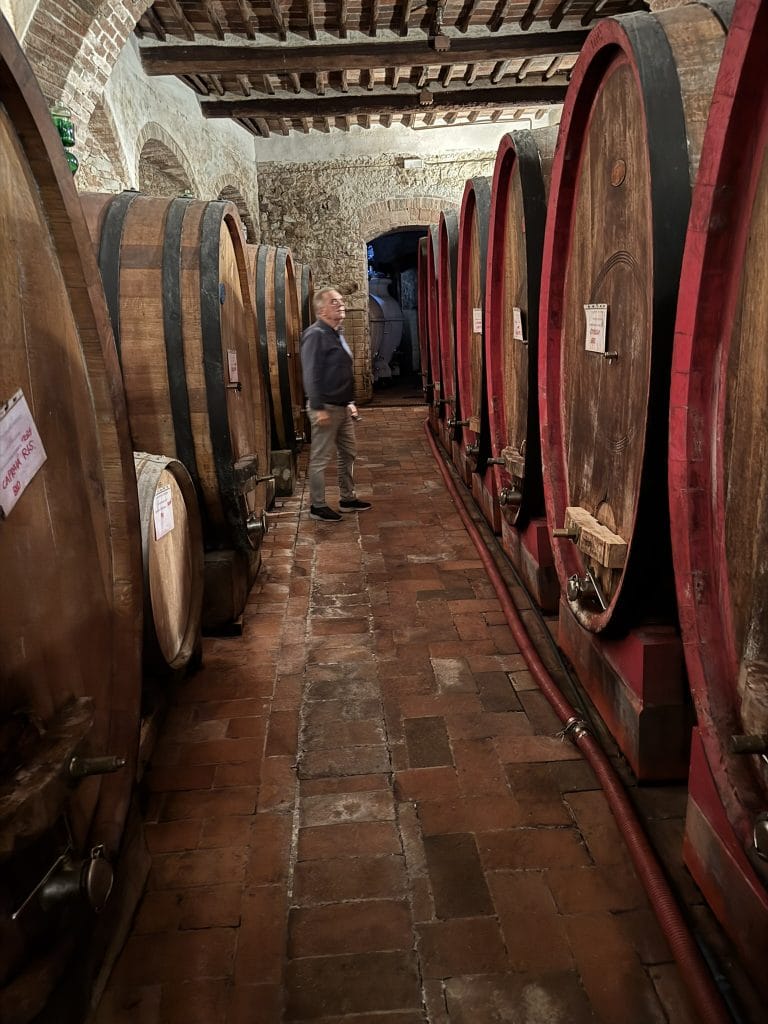
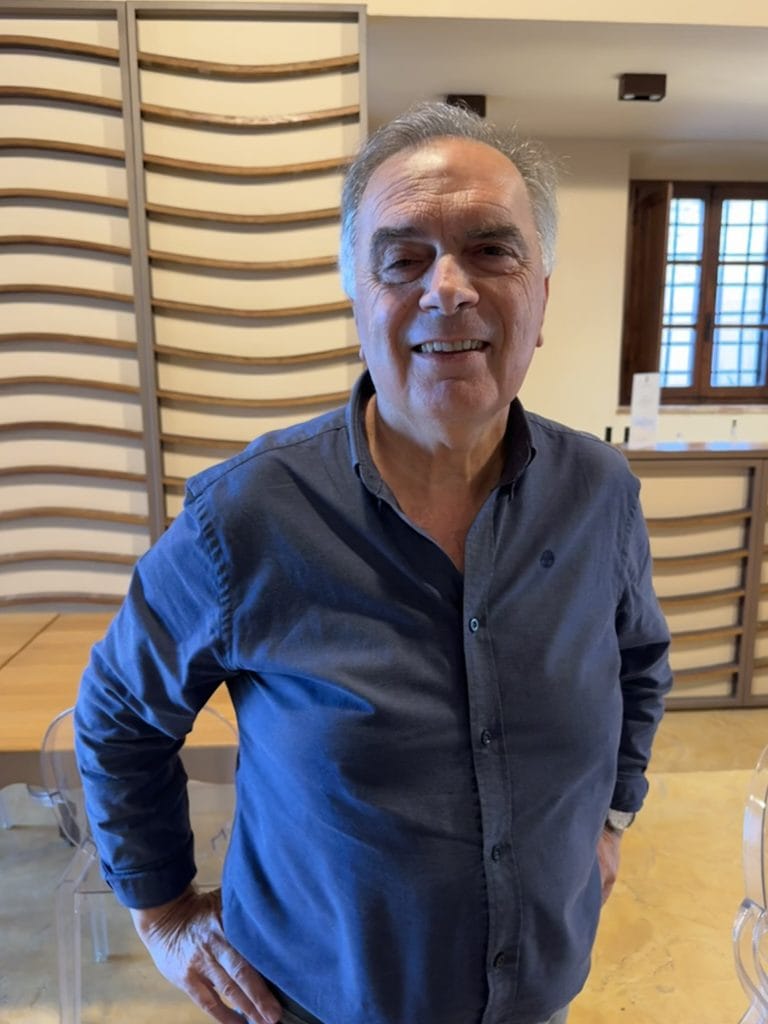
Capraia winery is located in the heart of the Chianti Classico region. Capraia’s vineyards enjoy an exceptional position at an altitude of about 300 meters above sea level, with limestone and schist soils that impart notable elegance and pronounced minerality to the wines. Capraia wines are considered the leading line of the Rocca di Castagnoli estate under the stewardship of the Calì family, combining agricultural tradition with modern quality standards.
Rolando Bernacchini, the winery’s CEO, says that 23 years ago, when he began working in Chianti Classico, the quality of the wines was—put cautiously—uneven. To his delight, the region has since undergone a quality revolution. Tuscany’s major historic producers, such as Antinori and Frescobaldi, invest heavily in Chianti Classico. If Brunello once led in quality, today Chianti is closing the gap—and at a more competitive price. In his view, Chianti Classico wines have already surpassed Vino Nobile in quality, even though Vino Nobile used to be held in higher regard. To his taste, the winery’s most important wine is not a Super Tuscan, a Riserva, or a Gran Selezione, but the Chianti Classico. The other wines may cost more because they are produced in smaller quantities, but in terms of flavor, Chianti Classico leads. The estate could have planted Merlot, as others did, and made a Super Tuscan, but the terroir is far better suited to Sangiovese. It may sound conservative, but the winery is focused on quality—and Chianti Classico delivers it in a big way.
Capraia Rosato 2024
A serious rosé. Rich in fruit flavors—wonderful. Excellent value at €14. I scored it 91.
Capraia Chianti Classico 2023
An excellent wine. A basic Chianti Classico, but perhaps the best of our visit. Marked by cherry aromas, medium-to-full body, powerful, with a fine finish. Outstanding value at €18. I scored it 92.
Capraia Chianti Classico Riserva 2021
Deep cherry scents. Some complexity. Powerful and mouth-filling. Wine Spectator (WS) gave it 93. I gave it 94.
Capraia Effe 55 Chianti Classico Gran Selezione 2020
Delicate aromas of cherry, leather, and oak. Power and grip on the palate. Good finish. WS gave it 93, and so did I.
Fontodi
Fontodi is considered one of the most important and influential wineries in Tuscany in general, and in Chianti Classico in particular. It is owned by the Manetti family. The estate is certified as organic and operates according to sustainable principles. Fontodi is known for its absolute fidelity to Sangiovese, aiming to produce wines that express the unique terroir of its vineyards. In the past, most of the estate’s vineyards belonged to the Church—hence the winery’s cross emblem.
Terrazze San Leolino Gran Selezione Chianti Classico 2021
Aromas of cherry and pomegranate. Elegant and balanced, medium-bodied with a fine finish. WS gave it 95; I gave it 93.
Vigna del Sorbo Gran Selezione Chianti Classico 2021
Aromas of cherry, dark fruit, and violets. Elegant, with some complexity—delicate yet powerful, full-bodied, with a long finish. WS gave it 97; I gave it 94.
Flaccianello della Pieve 2021
The estate’s iconic “Super Tuscan.” Because it is 100% Sangiovese, it could not previously be labeled Chianti Classico, since the rules required a blend of varieties. It is harvested from the best-selected clusters in high-altitude vineyards. The winery’s flagship wine and one of the world’s most acclaimed. A monumental wine: perfumed with blackberry and cherry, rich and dense, combining elegance with power and complexity. WS gave 97; RP (Robert Parker) gave 98; I gave 95. Price: around €150.
Barone Ricasoli

“The vision came later—at first, we were only trying to save what we could.”
Barone Ricasoli is one of the oldest and most prominent wineries in Chianti Classico, with roots dating back to 1141, making it the oldest winery in Italy and one of the oldest continuously operating wineries in the world. Baron Bettino Ricasoli (1809–1880) was a statesman who served twice as Italy’s Prime Minister. In 1872 he developed the modern “recipe” for Chianti—a formula that became the regional standard for many decades. Since 1993 the estate has been managed by the 32nd baron of the family, Francesco Ricasoli. He led a process of technological renewal, deep research into soil types, and meticulous vineyard mapping to raise quality. They concluded that soil type has the decisive impact on wine quality—not altitude, which mainly affects harvest timing.
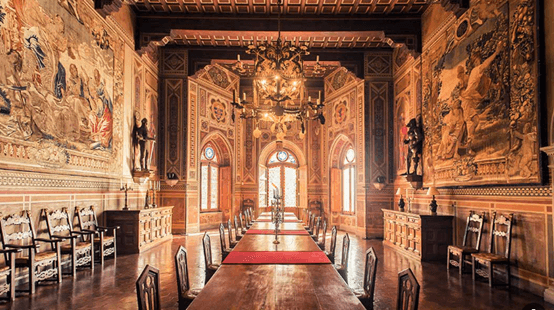
A tasting at Barone Ricasoli is a special experience. The visitor center is set in an impressive ancient castle. While regular guests received a single glass at the counter, Baron Francesco Ricasoli himself greeted us at the entrance and led us to the cellar for the tasting. Before we began, he quietly asked me: “You aren’t Yossi Ginosar from the Shin Bet, are you?” When I denied it with a smile, he smiled back and said: “I know—he passed away. But you’re a wine blogger; I’ve read your articles.”
Baron Francesco Ricasoli told us that in the 1970s his family sold the estate due to financial difficulties. while it was no longer in family hands, the winery lost both quality and its good name. In 1993, when Francesco was still a professional photographer, an opportunity arose to buy back the estate, which had lost much of its value. He watched with sorrow as the family’s pride continued to fade, and decided to bring it back to life. He went all in and risked the entire family fortune, driven by passion. The rest of the family was afraid, withdrew from the deal, and he remained alone in the struggle. Francesco says that at the time he understood nothing about winemaking, nor was he a businessman (as noted, he was a professional photographer) but he had a vision and he was a people person. Wisely, he chose an excellent team—some of whom had been with the winery since his father’s era and remain with him to this day. When he took over, the veteran employees welcomed him enthusiastically. Beyond the hope for a stronger economic base, they saw great importance in the return of one of Chianti’s oldest and most respected families to the community. In the early years he was broke—but happy. He discovered that restoring the estate to the top was not as quick as he had hoped: it is easy to ruin a good name, but it took him 25 years of hard work to rebuild it.
Barone Ricasoli wines are known as “shy.” They need a bit of time in the glass to open up. They are best enjoyed in a Burgundy glass, since their flavors do not burst out like Cabernet and Merlot, but are closer to Pinot Noir—whose beauty lies in nuance. The winery’s leading wines are its Gran Selezione. While most estates have a single wine in this category, the Baron decided to bottle four different Gran Selezione wines—one from each vineyard. At first there were fears of cannibalization, but it quickly became clear the decision was wise: different consumers have different tastes, and all four single vineyards succeeded.
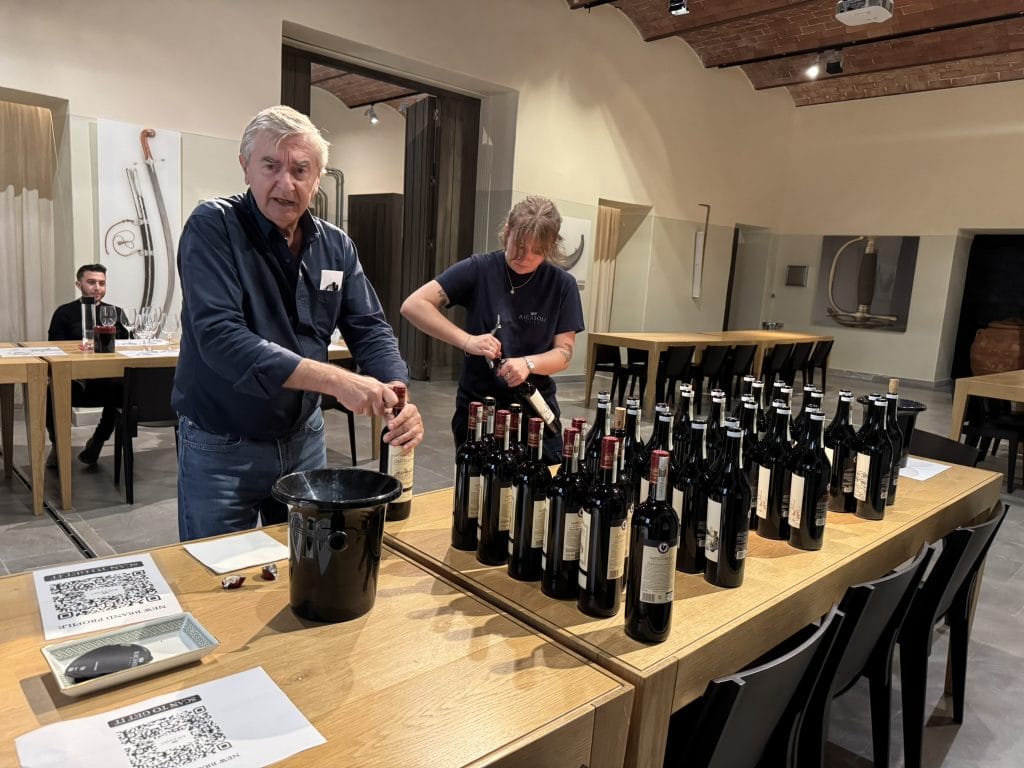
The tasting itself was breathtaking. The Baron poured all four single vineyards wines from multiple vintages. Behind every bottle stood a backup bottle, just in case. Each glass was rinsed with wine before pouring, and a special tasting sheet was prepared. Throughout the tasting, the Baron’s attention to detail and insistence on quality were unmistakable. Notably, the wines we tasted were drinkable even in their youth and maintained a consistent level without fading even after 15 years.
The Baron visited Israel two or three times, including during the Second Intifada, when tourists were hesitant to come. We found that behind the dignified, slightly reserved façade was a warm person who knows Israel’s history well—and may even be sympathetic to it.
I asked him who would succeed him at the winery. He said proudly that his daughter, a criminal defense attorney by profession, recently left her job—roughly at the age he left photography—to join the winery’s management.
Roncicone Gran Selezione Chianti Classico 2018
Flavors of cherry and strawberry, tobacco, and oak. Structured, balanced, and elegant. Deep and powerful. WS gave 93; so did I.
Castello di Brolio Gran Selezione Chianti Classico 2019
So elegant. Perfumed, with aromas of cherry and flowers. It grips the palate with intensity and fills it with its full body. Long finish. RP gave 98; WS 95; I gave 94.
Colledilà Gran Selezione Chianti Classico 2020
Cherry aromas. Powerful and muscular yet elegant. Full of ripe fruit, leather, and spice. RP gave 95; WS 93; I gave 94.
Castello di Brolio Gran Selezione Chianti Classico 2020
A calmer nose compared to the previous wines, but rich in fruit and spice. Powerful. RP gave 94; WS 92; I gave 94.
Roncicone Gran Selezione Chianti Classico 2021
A little shy on the nose. Deep flavors of ripe cherry. Long finish. WS gave 96; RP 97; I gave 95.
Colledilà Gran Selezione Chianti Classico 2022
Without a doubt the star of the vintage. Rich, rounded, filling the palate with flavor. Still tannic, but despite its young age, very enjoyable. WS gave 93; RP 95; I gave 94.
Caparzo + Altesino
“Sangiovese is in every wine I make. I am in love with Sangiovese. Sangiovese is so unique. It is so faithful to us.”
Elisabetta Gnudi Angelini is a visionary businesswoman who has been producing wine for five decades at two estates in Montalcino—Altesino and Caparzo—in the Brunello di Montalcino region, as well as at several additional wineries in the Chianti area.
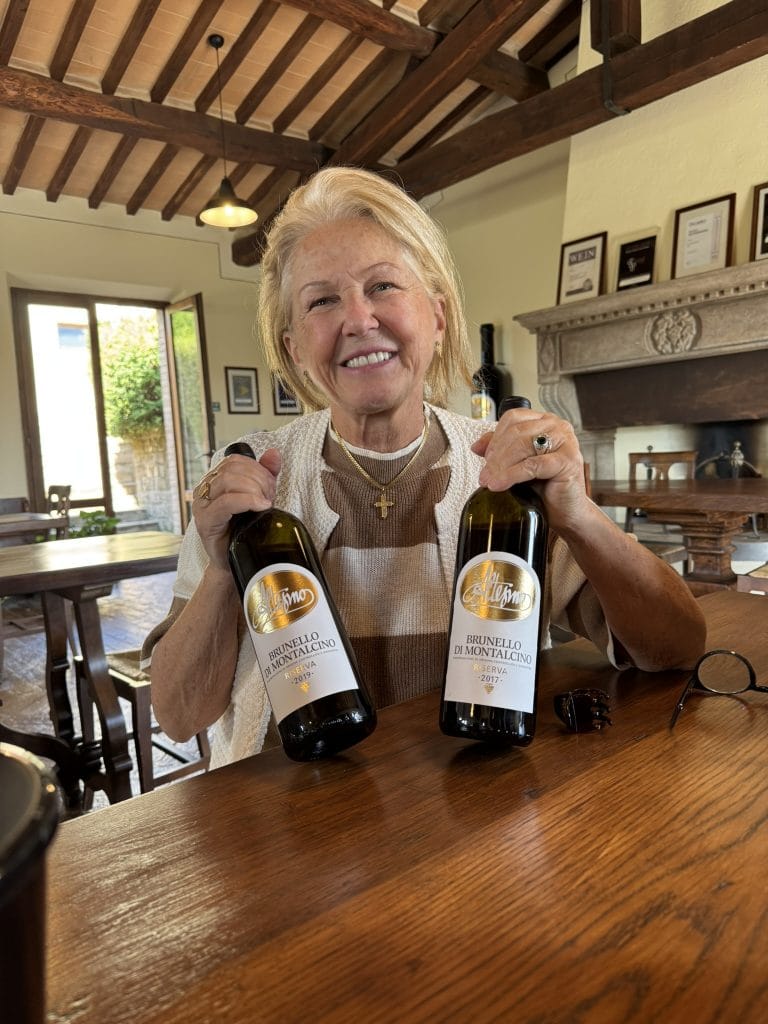
Elisabetta Gnudi Angelini was born in the Emilia-Romagna region of central Italy, grew up in Rome, studied finance at university, and began a career in the film industry. She married the late Paolo Angelini, from one of Italy’s leading pharmaceutical families. After his death, opportunity and a longing for country life drew her into the world of wine. She began acquiring vineyards and wineries in Montalcino—high-risk purchases leveraged with bank loans. To her great good fortune, when Italy moved from Lira to Euro, the value of the massive loans she had taken was effectively cut in half. She was a brave young woman who gambled everything. She told herself: if I don’t do it now, it will never happen. In our interview, Elisabetta said: “I am an older woman now, and perhaps today I would not take such risks”. Looking into her eyes, still sparkling with excitement, I told her the spark is still there. Elisabetta blushed slightly and smiled.
Even today, her work remains in full momentum, and she continues acquiring wineries across Chianti. Her husband, who recently retired, urges her to slow down and enjoy time with their five grandchildren. Despite the fire burning in her, she says she intends soon to decide how to divide the empire she has built among her children and grandchildren. Looking ahead, Elisabetta would be happy to expand her wineries’ global presence. She currently sells to 46 countries. In the past she also sold to Israel, but for some reason imports stopped. She would be happy to export to Israel again. Elisabetta laments the media’s stance against Israel: “Hamas is on our streets. In your war against them, you are doing us a service. We should thank you.” I invited Elisabetta, on her next visit to Israel, to join a group of friends for a tasting of leading Israeli wines. The invitation was gladly accepted.
Recently, the family began growing ancient varieties of durum wheat (semolina) on their land—varieties no longer cultivated in Italy—and they make pasta themselves. They do not sell it; it is for family consumption only. “My family is large, and in Italy we eat a lot of pasta… You can’t compare it to commercial pasta. The taste is simply wonderful.”
We tasted the wines of both estates, which are managed independently and have distinct styles.
Altesino
Altesino’s Brunello wines are considered a benchmark for classic, precise, terroir-driven Brunello di Montalcino, with a consistent house style maintained over decades. The wines are elegant rather than over-extracted, and they retain freshness even in warm vintages.
Altesino Brunello di Montalcino 2020
Soft and juicy, bursting with cherry and strawberry flavors, full of minerality, and herbs. It opens with the scent of wet earth after rain. Elegant, with fine tannins. Oak is handled skillfully, adding light spice notes woven into a silky texture. Long, finish. WS 93, RP 95, I gave 94.
Altesino Brunello di Montalcino Vigna Montosoli 2020
A powerful red showing a richer, more syrupy side with black-cherry, blueberry, violet, and orange-peel notes in a dense, opulent profile. Despite its richness, it is elegant and evolves into a long, resonant, long finish. WS and RP gave it 96; I also gave 96.
Altesino Brunello di Montalcino Riserva 2019
Opens gently, with flavors of cherry, plum, and pine. Dense, with significant fruit weight, revealing depth and a more pronounced sweetness of dark fruit. Exceptionally long finish. WS 98, RP 94, I gave it 94.
Altesino Brunello di Montalcino Riserva 2017
Dark-fruit flavors of cherry, wild-herb plum compote, and damp earth. Slightly restrained. The finish is multilayered and rich, with the power of full-bodied Sangiovese. More ready to drink than 2019, though 2019 has a brilliant future. WS 93, RP 93, I gave it 96.
Caparzo

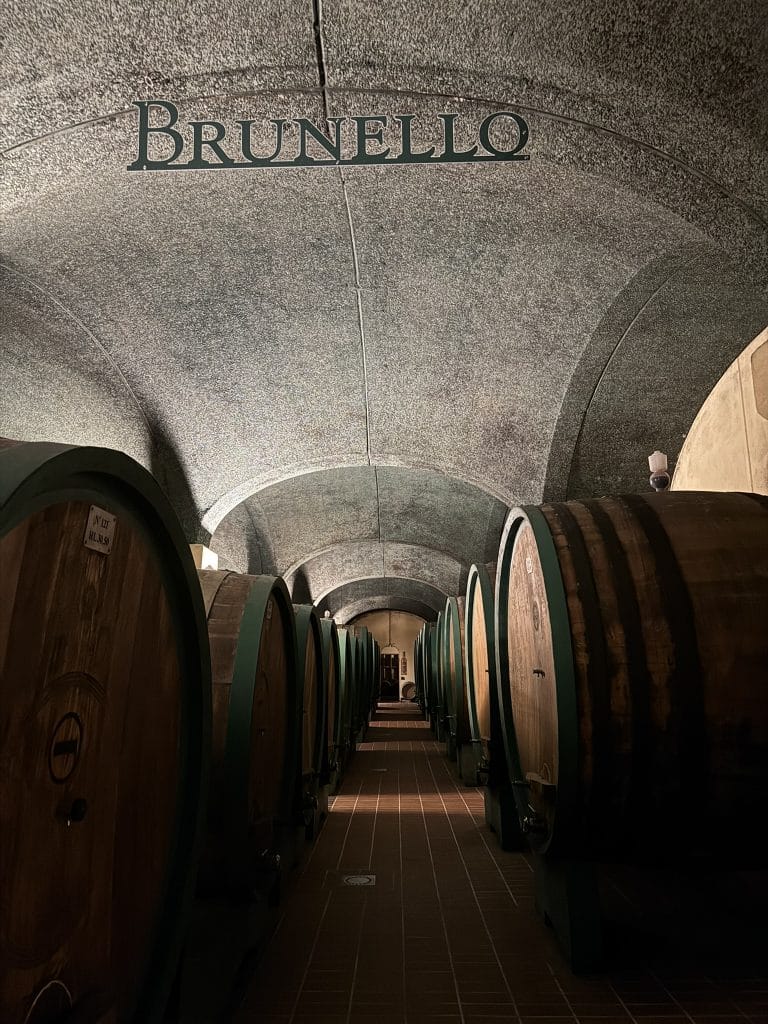
Caparzo’s Brunello wines show a traditional, clear, generous style, emphasizing soft fruit. Minerality is more restrained here, alongside respectable aging potential.
Caparzo Brunello di Montalcino Riserva 2020
The nose is still closed. Subtle leather aromas, light complexity. Explodes on the palate with power; slight bitter. RP 94, WS 95, I gave it 94.
Caparzo Brunello di Montalcino Riserva 2019
Oak, cherry, and floral aromas. Full-bodied and tannic. A big wine with a long finish. WS 93, RP 94, I gave it 94.
Caparzo Brunello di Montalcino Riserva 2017
Round, juicy Brunello—big and rich. Aromas of cherry and strawberry, minerals, and cigar. Well-built, offering excellent balance and impressive length. WS 96, RP 91, I gave it 94.
Casanova di Neri
“The next big thing in Brunello: drinking it young—and that’s okay.”
Casanova di Neri’s Brunello wines are defined by power, depth, and concentration. They show ripe Sangiovese with dense dark fruit, a rich texture, and firm tannins. The estate is especially known for its single-vineyard wines, Tenuta Nuova and Cerretalto, which deliver Brunello with long aging potential while maintaining balance and vitality.
Brunello di Montalcino 2020
Perfumed; despite its youth it already shows complexity. Concentrated and powerful. RP 94, WS 94, I gave it 95–96.
Tenuta Nuova Brunello di Montalcino 2020
Wow—what a great wine. Complex, multilayered, and dense, with an abundance of cherry and dark-fruit aromas. Elegant yet powerful. WS 95, RP 96, and I gave it 96 as well.
Giovanni Neri Brunello di Montalcino 2020
Strawberry, cherry, and eucalyptus on the nose. More gastronomic than the previous wine, showing elegance and harmony alongside richness. It fills the palate—still tannic. WS 94, RP 97, I gave it 96.
Cerretalto Brunello di Montalcino 2019
Wow— An impressive wine, bursting with aromatic complexity and character. Monumental, yet calm on the palate. Tannic, powerful, and harmonious despite its youth. Aromas and flavors of black cherry, blueberries, black pepper, and wild herbs. Despite the density, the acidity preserves freshness. RP 97, WS 98, I gave it 97.
Cerretalto Brunello di Montalcino 2017
Perfumed and complex. A wonderful wine, with the perfect balance between power and elegance—an elusive balance. Cherry fruit and spice. On the palate it shows texture, depth, and juiciness—perhaps a little too calm for my palate. WS 98, RP 98, and I gave it “only” 96.
